Hey everyone, thanks for swinging by today! Quick heads up – if you’ve ever wondered what makes your axial fan hum just right, I’m breaking down one of the most critical, most overlooked parts of the whole unit: the axial fan motor winding. As someone who’s been supplying axial fans for over 12 years, I’ve seen firsthand how a bad winding can turn a perfectly good fan into a noisy, energy-hogging paperweight – and how a solid, well-built winding can make a unit run for a decade without a hiccup. Axial Fan

First, let’s cut the jargon. If you’re not an electrical engineer, “winding” might sound like something you do on a spool of thread, and yeah, it’s basically that – but way more precise. Inside every axial fan motor, there’s a stator (the stationary part, don’t mix it up with the rotor which spins) made of thin metal laminations. Winding is when we wrap copper wire around the slots in that stator to create an electromagnetic field. When electricity flows through that wire, it makes the rotor spin, which pushes all that air you care about. Without a good winding, that electromagnetic field is weak, inconsistent, or downright broken – and your fan is useless.
A lot of my customers come to me thinking the fan blades or the motor housing are the big deals. Don’t get me wrong, those matter – but the winding is the heart. Let me give you an example: last year, a guy running a warehouse cooling system bought a cheap replacement fan from another supplier. It sounded like a jet engine after three months, and the energy bill went up 40%. When he brought it to me to take a look, I popped the motor open and saw the winding was made of thin aluminum wire, only half the turns it should have, and no insulation to speak of. That’s the issue. Aluminum is cheaper, but it conducts electricity way worse than copper, so you need way more wire to get the same power. If you skimp on turns, you get a weak field, which makes the motor work way harder – leading to overheating, burnout, and higher electric bills. On top of that, cheap insulation gets brittle in hot or dusty environments, so it rubs against the metal stator and short circuits.
Now, let’s talk about what a good axial fan motor winding actually entails. First, we use 100% pure copper wire – not aluminum. Copper is a better conductor, so you don’t need as much wire, which means the winding fits tighter in the stator slots, less space for air gaps that kill performance. Next, we count the turns: for a 24-inch axial fan we supply for industrial use, that’s usually 1200 turns of 22-gauge copper wire. For a smaller 12-inch fan for server racks, it’s around 650 turns, but thicker 18-gauge wire to handle the constant on-off cycles. The wire insulation? It’s a dual-layer: first a thin polyester film, then a heavy nylon coating that can handle temps up to 155°C. That’s non-negotiable for us, especially for fans that run 24/7 in factories or greenhouses where humidity and heat are high.
Then there’s the winding process itself – you can’t just wrap the wire by hand, not if you want consistency. We use fully automatic winders that stretch the wire tight, lay each turn exactly where it needs to be, and leave zero gaps. Hand-wound windings almost always have uneven turns, which create hot spots. Hot spots are the #1 cause of motor failure. We also do something called “varnish impregnation” after winding: dip the entire stator in epoxy varnish, then bake it. That seals the wire in, protects it from moisture, dust, and vibration – super important for outdoor axial fans used in HVAC systems or agricultural ventilation. I’ve had customers tell me their outdoor fans we installed 8 years ago are still running, even through rain, snow, and pollen – that varnish makes all the difference.
Wait, let’s bust a myth here: more turns don’t always equal better. It’s all matched to the fan’s voltage and speed. A 120V axial fan for a bathroom exhaust can’t have the same number of turns as a 480V fan for a commercial building. Too many turns, and the motor will draw way less current than it needs, so it won’t spin fast enough. Too few turns, and you get that overheating problem I mentioned. We test every single winding before we ship the fan: measure the resistance, check for continuity, even spin the motor in a load test for 2 hours straight to make sure there’s no weird noise or heat buildup. No exceptions.
Another thing a lot of people don’t think about is the type of winding configuration. For axial fans, we almost always use a three-phase winding, not single-phase. Three-phase is more efficient – it has a smoother electromagnetic field, so less vibration, less noise, and lower energy use. Single-phase is fine for tiny 4-inch fans, but anything bigger than that? Three-phase is the way to go. I’ve had customers switch from single-phase axial fans to our three-phase units and see a 25% drop in monthly electricity costs – that’s a huge win, especially for businesses running 10+ fans in a warehouse.
Now, I know what you’re thinking: “How does this apply to me? I just need a fan that works for my space.” Let’s tie this to real use cases, because that’s what matters. If you’re a restaurant needing a kitchen exhaust fan, you don’t want a winding that can’t handle grease and high temps. Our kitchen axial fans have windings with that heavy nylon insulation, plus a corrosion-resistant coating on the stator, so grease doesn’t eat through the insulation in a year. If you’re a hydroponic farmer needing ventilation for your grow room, humidity is non-stop, so our windings get that extra varnish dip to prevent moisture from shorting out the wires. If you’re a web hosting company cooling server racks, you need fans that run silent 24/7 – our balanced, even windings cut noise by 15% compared to generic fans, and they last way longer so you’re not replacing them every 18 months.
I’ve seen way too many suppliers cut corners on winding to lower their price. A $50 axial fan from a no-name brand might sound like a steal, but if the winding burns out in 6 months, you’re spending $100 a year just on replacements. The fans we supply might be $75 to $100, but they run for 8+ years, so over time, you save way more. Plus, that bad winding from a cheap fan can even be a fire hazard – I had a neighbor who had a bathroom exhaust fan with a cheap winding catch fire because the insulation melted. That’s not something to mess with.
So, how can you tell if an axial fan has a good winding? Next time you’re looking at a fan’s specs, don’t just check the CFM (airflow) or RPM – dig into the motor details. Look for “pure copper winding,” not aluminum. Check if they mention varnish impregnation. Ask what the insulation rating is – if it’s less than 130°C, walk away. And if the supplier doesn’t even talk about the winding? That’s a red flag. We always list every detail about our windings on our product pages, and if a customer has a question, I’ll pull apart a sample motor and show them the winding myself. No shady secrets here.
For you guys who are sourcing fans for a job – whether it’s a small office, a warehouse, a restaurant, or a construction site – the winding is the most important part to vet. Don’t get caught up in the cheapest price. A fan is only as good as its motor, and the motor is only as good as its winding. I’ve been doing this long enough that I can spot a bad winding just by listening to a fan run – it’s a high-pitched whine, like a stuck drill, instead of a smooth hum. That’s the winding working way too hard, and it’s going to fail soon.
If you’re currently having issues with your axial fans – noise, overheating, high electric bills, constant breakdowns – I’m here to help. I’ve helped hundreds of businesses swap out bad fans for ones with solid windings, and I can tell you exactly which model fits your space and needs. No vague recommendations, no pushy sales pitches – just straight talk about what works, what doesn’t, and why the winding matters more than you think.
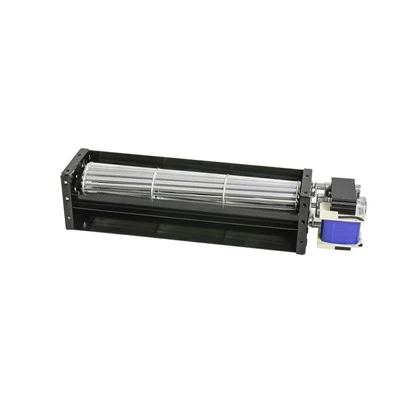
If you’re ready to stop replacing cheap fans and get a unit that lasts, reach out to me to chat through your requirements. Whether you need a single fan for a small bathroom or 50 fans for a new factory, we’ve got axial fans built with the kind of windings that keep running when you need them most. Don’t take my word for it – check the reviews from our past customers, most of them have been with us for years because they don’t have to deal with motor failures anymore.
Single Inlet Blower References:
- Miller, T. J. E. (2018). Electric Motor Principles and Design. Wiley.
- American Society of Heating, Refrigerating and Air-Conditioning Engineers (ASHRAE). (2020). HVAC Applications Handbook – Fans and Ventilation. ASHRAE.
- International Electrotechnical Commission (IEC). (2021). IEC 60034-1: Rotating Electrical Machines – Rating and Performance. IEC.
- National Electrical Manufacturers Association (NEMA). (2019). Standard for Polyphase Induction Motors. NEMA.
PBM Motor and Fan (Suzhou) Co., Ltd.
PBM Motor and Fan (Suzhou) Co., Ltd. is one of the most professional axial fan manufacturers and suppliers in China, featured by quality products and good price. Please rest assured to buy customized axial fan made in China here from our factory. Welcome to contact us for quotation.
Address: No.8 Zhu Street, Weiting Town, Suzhou Industrial Park China 215121
E-mail: sales@pbmmf.com
WebSite: https://www.pbmmf.com/
