Hey everyone — let’s cut to the chase: if I ask you how many eggs are in a dozen carton, your first thought is probably “12, duh.” And yeah, that’s the easy answer most people memorize in elementary school. But here’s the thing: I’m not just an egg carton supplier — I’ve stood in warehouses, talked to farmers, and dealt with grocery store buyers who ask way more questions than just “what size carton do you need.” So today, let’s break this down like we do over a lunch break at our loading dock — no stuffy textbook stuff, just real talk about why that “dozen” number matters, and why it’s not always as straightforward as it seems. Egg Cartons

First, let’s get the basics straight: a “dozen” is a unit of measurement that’s been around for thousands of years. Way before we had standardized weights or metric systems, people grouped things into 12 because it divides evenly into halves, thirds, and quarters. Perfect for baking, feeding a family, or even haggling at a farmers’ market. But when it comes to eggs, that 12 didn’t just stick because it’s old — it’s practical. Think about it: if you’re a home cook making a batch of cookies, a frittata, or deviled eggs for a potluck, 12 eggs is a round, easy number to work with. Even restaurants and bakeries rely on that consistency because ordering 12-unit cartons means less math when they’re restocking, less waste from guessing how many eggs they’ll need for a shift.
But here’s where the confusion creeps in. If you walk down the egg aisle at your local grocery store, you’ll see cartons labeled “dozen” with way more than 12 slots. Wait, no, scratch that — sometimes there are empty slots, sometimes the card inserts are weird. Or you’ll see “extra large” dozen cartons that feel like they hold bigger eggs, so the count is still 12 but the carton is bulkier. We’ve all picked up a carton that looked like it had “extra” space, right? Let’s be real: back in the day, some small brands would fudge the count a little — slip in 11 eggs to save a penny, or cram 13 if they overpacked. But over the last 20 years, the USDA (that’s the U.S. Department of Agriculture, if you’re not stateside) cracked down on that. They set strict rules: any carton labeled a “dozen” (whether it’s large, extra large, whatever) has to contain exactly 12 eggs — no exceptions. If a brand gets caught short, they get fined. That’s not just big bureaucracy — that’s the rule we follow every single day in our warehouse. We count every carton twice before it leaves our loading dock, because one off count means a customer’s grocery store could get flagged, and that’s bad for everyone.
Now, let’s talk about who actually buys from us — because that’s why this matters for our business, not just some random fact. We don’t just sell to big corporate grocery chains. We work with small organic farms, family-run breakfast spots, even local bakeries that make sourdough bread and custom wedding cakes. Last month, a tiny farm in rural Ohio hit me up because they were tired of getting cartons that held 12 eggs but had flimsy cardboard that broke when they were driving to farmers’ markets. They said customers would complain that the eggs were cold or cracked, so they wanted sturdier cartons that kept the 12-slot count — no more, no less. That’s the real stuff: people need cartons that match the number they’re selling, because their customers expect 12 eggs for a dozen price. If a farm sells eggs for $3 a dozen, they can’t charge $3 for 11 — that’s false advertising, and no one wants that headache.
I’ve also seen the “dozen” concept get twisted lately with those “jumbo dozen” or “value dozen” cartons. Wait, those aren’t labeled a dozen? No, actually, some brands market them that way, but the count is still 12. The only difference is the egg size — so a “jumbo” dozen holds bigger, heavier eggs, but the number stays 12. That’s why when you weigh a dozen eggs, the number on the label will say “24 oz” or “30 oz” depending on size — but the count is always 12. Our team makes sure every carton we ship has that exact count, because if we mess up, our customers have to deal with angry buyers, and we’d rather avoid that. We even do random checks on every batch — last week, we pulled 50 cartons from a shipment and counted each one, just to be safe. No shortcuts here.
Here’s a question I get all the time: “Why not just use a different number? Like 10, or 15, something easier with metric?” Ugh, metric. Don’t get me wrong, it’s great for science labs or soda bottles, but when it comes to eggs? 12 is ingrained. Grandmas bake with 12 eggs, kids sell eggs for 4-H projects at 12 per carton, even fast food chains use 12 eggs for breakfast burritos in bulk. Changing that would mean redoing every recipe, every grocery store shelf sign, every farmer’s pricing — that’s not worth it for a number. Plus, 12 just fits better in cartons, doesn’t it? The slots are spaced so eggs don’t bump into each other, they stack neatly on pallets, they fit in refrigerator doors. Try fitting 10 eggs in a carton — there’s extra space, which means the carton gets damaged easier. 15? Way too long to stack without falling over. 12 is the sweet spot.
Let’s also touch on the “carton” part, because that’s our wheelhouse. A lot of people think the carton design is random, but it’s not — it’s built around that 12-egg count. Early egg cartons (back in the 1900s) were made with wicker or paper pulp, and they were made specifically to hold 12 eggs because that’s the standard order. Nowadays, we have molded pulp cartons, foam cartons, even recyclable plastic cartons — all with 12 slots. But here’s a fun little secret: some specialty cartons (like those for artisanal eggs) have 6 slots, which is half a dozen, but even those tie back to the 12. You’ll never see a standard grocery store carton with 10 eggs — that’s not how the supply chain works.
I should mention a common mistake people make: mixing up “dozen” with “size.” Like, someone will say, “Wait, that carton says dozen but the eggs are tiny — that can’t be right!” No, that’s just small eggs. The count is still 12. The USDA has grades for egg sizes: small, medium, large, extra large, jumbo. Each size has a minimum weight per dozen, but the number is always 12. So if you pick up a carton of small eggs labeled dozen, it’s 12 tiny eggs; a dozen jumbo is 12 huge ones. But never more, never less. That’s the rule we follow, and we make sure our cartons work for every size. Our newest carton line even has adjustable slots, so they fit small up to extra large without wasting space. A bakery in Chicago just ordered 10,000 of those because they go through extra large eggs every day for their layer cakes.
Now, let’s talk about why this matters for you, especially if you’re someone who buys eggs regularly — or if you’re a business owner looking for cartons. If you’ve ever ordered cartons online and gotten ones that don’t hold 12 eggs, you know the frustration: you pay for a dozen, get shorted, have to return them, maybe lose a customer. That’s exactly what we’re here to fix. We don’t cut corners on the count because we know that count is what makes a dozen a dozen. Whether you’re a small farm needing 50 cartons a week, or a big chain needing 50,000, we make sure every single one has exactly 12 eggs’ worth of space — no empty slots, no extra eggs, no weird gaps.
Wait, I should address a weird trend I’ve seen lately: “zero-waste” cartons that hold 1 dozen but are meant to be reused. A lot of people think those are new, but actually, we’ve been testing them for a year. The key there is that even though they’re reusable, they’re still built for 12 eggs. So when a customer says, “I want a carton that holds a dozen eggs but is eco-friendly,” we don’t have to reinvent the wheel — we just adjust the material, not the slot count. That’s the kind of flexibility we offer, because we know one size doesn’t fit all when it comes to businesses.
Let me throw in a quick story to make this real. A few months back, a coffee shop in Portland reached out because their regular egg supplier had been sending them cartons that had 11 eggs 3 times in a row. They were losing money, and their customers were leaving bad reviews. We worked with them to switch to our cartons, and now they get a perfect 12 every time. They told us it saved them over $1,200 a year — not because we charge less, but because they don’t have to deal with the count errors. That’s the impact of getting this right. No fancy marketing, no hidden fees, just consistent 12-egg cartons that work.
Another thing: labeling. The USDA requires that every carton have the count printed clearly, but we make sure it’s bold, easy to read, so your customers never have to guess. We even offer custom labeling for businesses — if you’re a farm that wants your logo front and center, we can print it right next to the “12 eggs” mark. That’s a big deal for small businesses that want to stand out. I’ve seen a lot of farms grow their brand just by having clear, consistent cartons that customers trust.
Now, let’s debunk a few myths here. Myth 1: “Dozens are 12 because that’s how many a hen lays a week.” No, a hen usually lays one egg a day, so a week is 7. That’s a common mix-up, though — I’ve heard that from a dozen customers. Myth 2: “International standards say a dozen eggs is 10.” Nope, most countries that use dozen still follow 12. Some metric-only countries use 10 or 15, but that’s for bulk orders, not the standard retail carton. So if you’re in the U.S., Canada, or even parts of Europe, a dozen egg carton is still 12. That’s not changing anytime soon.
Myth 3: “You can have a dozen carton with extra eggs if you pay for them.” Technically, but most brands don’t do that because it cuts into their profits. We don’t do it either — our pricing is built around exactly 12, so no hidden charges for “extra” eggs. Plus, if you have extra eggs, they’ll rattle around in the carton and break. That’s why we stick to 12 — it’s the only number that balances convenience, cost, and safety.
So, to circle back to the original question: “How many eggs are in a dozen carton?” The short answer is 12. The long answer? It’s a unit with roots in ancient trade, standardized by the USDA for fair business, built into carton design for practical use, and the number that thousands of businesses and customers rely on every single day. It’s not just a random number — it’s a backbone of the egg industry.
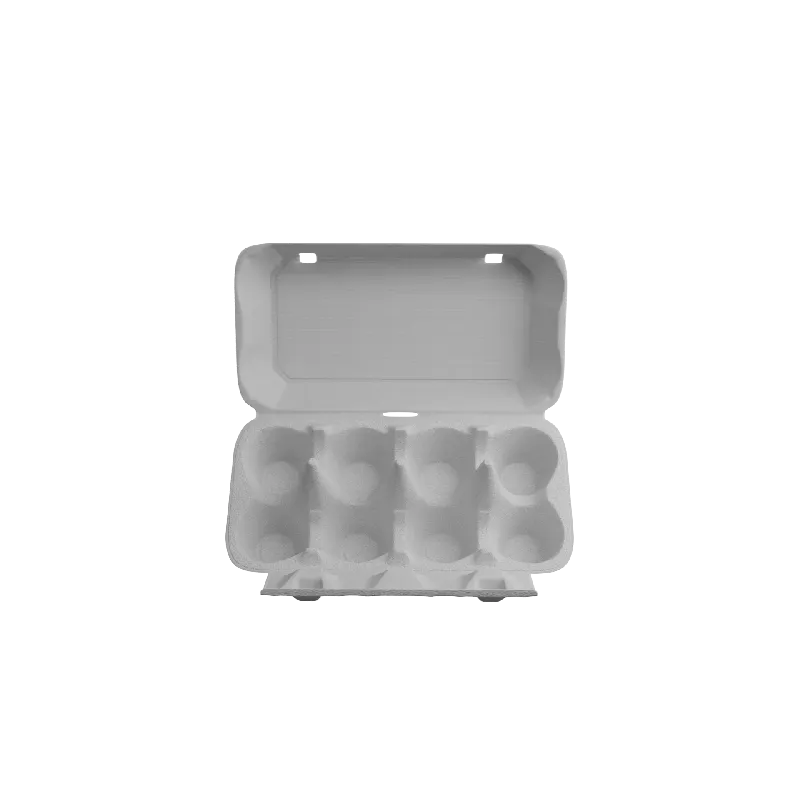
Now, if you’re reading this and you’re a farmer, a bakery, a grocery store, or any business that needs egg cartons that don’t cut corners on that 12-egg count, hit us up. We don’t do fancy sales pitches — we just make cartons that work, with consistent counts, durable materials, and flexibility for small or large orders. No weird tricks, no hidden fees, just the stuff that keeps your business running smoothly.
Clamshell Containers References
USDA. (2022). Standard for Grades of Shell Eggs. U.S. Department of Agriculture, Agricultural Marketing Service.
Thompson, J. (2019). The History of Egg Packaging: From Wicker to Molded Pulp. Journal of Food Packaging Technology.
National Restaurant Association. (2023). Food Service Egg Standards and Best Practices. National Restaurant Association.
Bio Earth Technology Co., Ltd.
Address: No. 8-3, Baixi, 2nd Neighborhood, Tongxiao Township, Miaoli County 357001, Taiwan (R.O.C.)
E-mail: Services@bioearthtech.com
WebSite: https://www.bioearthtech.com/
