What is Air Insulated Switchgear? High and Low Voltage Switchgear
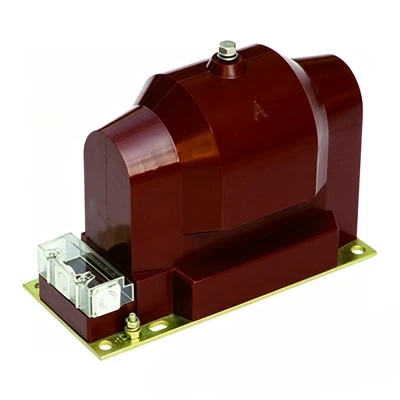
If you’ve ever walked through a power substation or stood near a tall utility pole, you’ve probably seen switchgear at work—though you might not have known it by name. As a supplier of high and low voltage switchgear for over a decade, I get asked this question more often than you’d think. Customers, from small business owners planning a new facility to plant managers upgrading an old industrial site, want to understand why air insulated switchgear (AIS) is still a go-to choice for so many projects, especially when there are newer alternatives like gas insulated switchgear (GIS) on the market. Let me break this down in plain, practical terms, no jargon that doesn’t need to be there.
First, let’s start with the basics: what is switchgear, period. It’s the equipment that controls, protects, and isolates electrical circuits in a power system. Think of it as the traffic light for electricity. When a circuit has a fault—say a short circuit or an overload—switchgear automatically shuts off the power to prevent damage to equipment, and lets you safely isolate parts of the system for maintenance without taking the whole network down. That’s non-negotiable for keeping lights on, factories running, and hospitals operating.
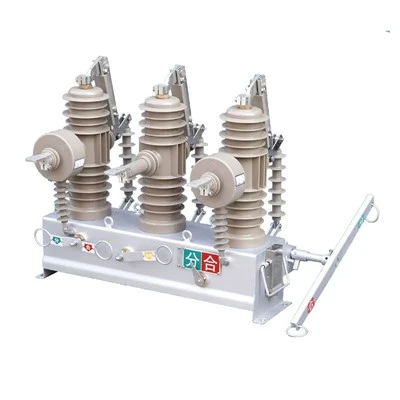
Now, air insulated switchgear is exactly what it sounds like: the live parts (the ones carrying high voltage electricity) are insulated by regular air, rather than a gas like sulfur hexafluoride (SF6), which is used in GIS. The design is straightforward: metal enclosures hold circuit breakers, disconnect switches, busbars, and other components, and the space between these live parts and the enclosure walls, or between adjacent live parts, is filled with air. That’s it. No fancy, pressurized gas chambers, no need for specialized gas handling equipment. It’s that simplicity that makes AIS so widely used, not just because of cost, but because it works reliably in most environments.
Let’s talk about where you’ll find AIS. Most medium-voltage substations (1kV to 52kV, the sweet spot for commercial and industrial applications) use AIS. I’ve supplied AIS for everything from a new 10kV substation for a shopping mall expansion, to 33kV units for a mining operation out in a rural area, to low-voltage AIS for a food processing plant that needs tight control over power for its refrigeration systems. Unlike GIS, which is often installed indoors or in compact spaces because it’s more expensive to build, AIS is versatile. It can be mounted outdoors in open-air substations, on concrete pads, no building required. That’s a big plus for remote locations or sites where space is cheap, because you don’t have to spend money on a substation building to house it.
So why choose AIS over other types? Let’s start with cost. From a supplier’s perspective, I can tell you that AIS is typically 20 to 40 percent cheaper than a comparable GIS system. The materials are simpler—no pressure vessels, no gas monitoring systems, no specialized training to handle SF6. For a small business or a project with a tight budget, that’s a huge difference. But it’s not just upfront cost. Maintenance is another big one. AIS components are easy to access. If a circuit breaker needs repair, you don’t have to strip down a pressurized gas tank, you just open the enclosure, check the parts, replace what’s needed. I’ve had customers who’ve owned AIS for 15 years with only routine inspections, no major failures. GIS requires regular gas leak checks, specialized tools for maintenance, and parts that are often custom-made, so service calls cost more and take longer.
Another advantage is environmental impact. SF6, the gas used in GIS, is a greenhouse gas—way more potent than CO2, like 23,500 times more, according to many electrical engineering studies. It stays in the atmosphere for thousands of years, so any leaks from GIS systems are a big environmental concern. AIS uses just plain air, no harmful gases, so it’s much greener. For businesses that have sustainability goals, that’s a key factor. I’ve had clients in the renewable energy sector—solar farms, wind farms—specify AIS specifically because they want their entire power infrastructure to have a lower carbon footprint.
But let’s be honest, AIS isn’t perfect. Its biggest downside is size. Because the insulation is air, you need more space between the live parts, so the entire AIS unit is larger than a GIS of the same voltage rating. If you’re working in a dense urban area where land is expensive, or you’re retrofitting an old substation that has very limited space, a giant AIS unit might not fit. That’s where GIS makes sense. Also, in very high voltage applications—above 52kV, say 132kV and up—the required spacing for AIS can get really big, sometimes too big for even large substations. So for ultra-high voltage, most utilities still opt for GIS, because the space savings outweigh the cost. Also, in very dusty or polluted environments—like a steel mill where there’s lots of metal dust, or a coastal area with salt air—AIS needs extra protection, like coated insulators or sealed enclosures, to prevent the air insulation from being compromised. I’ve had customers in coastal regions who have to clean AIS insulators twice a year to avoid flashovers, which is an extra maintenance step you don’t have to worry about as much with GIS.
Now, let’s get into how AIS works, for anyone who wants a bit more technical detail but not a textbook lesson. The core components of a typical medium-voltage AIS panel are: circuit breakers (to interrupt current), disconnectors (to isolate parts of the circuit for maintenance), load break switches (for lighter loads), current and voltage transformers (to measure power), and busbars (to carry electricity between components). All of these are mounted in a metal enclosure, usually steel, that’s grounded for safety. The air between the live parts provides enough insulation to prevent arcing—when electricity jumps between two parts it shouldn’t, which is dangerous and can cause fires or explosions. For higher voltages, you might have insulators made of porcelain or epoxy to support the live parts and keep them spaced correctly, so the air doesn’t break down.
Safety is a big part of AIS design. Modern AIS units have interlocking systems that mean you can’t open a panel door while the circuit is energized, or close a disconnector if the breaker is still on. That prevents accidental contact with live parts, which is a top priority for anyone working on switchgear. Also, the enclosures are designed to contain any internal faults, so if there’s a short circuit, the arc is contained within the enclosure and doesn’t escape into the surrounding area, which protects workers and nearby equipment.
As a supplier, I’ve seen AIS evolve a lot over the years. Back in the day, AIS was all open-frame, with exposed busbars and porcelain insulators, which needed a lot of space and frequent cleaning. Now, modern AIS is more compact, with sealed enclosures, coated insulators that resist dust and moisture, and digital monitoring systems that track things like temperature, current, and vibration in real time. That makes it easier to do predictive maintenance, before a fault happens, so downtime is minimized. For example, a food processing plant I supplied last year uses AIS with digital sensors that alert their maintenance team if a breaker’s operating temperature is getting too high, so they can replace it during a scheduled shutdown instead of an emergency one that would cost them thousands in lost production.
Another thing I hear a lot is people confusing AIS with low-voltage switchgear. Low-voltage switchgear (under 1kV) is often a type of AIS too, because it uses air insulation, but it’s built for lower power. AIS spans both medium and low voltage, and sometimes even into the low end of high voltage. It’s important to match the type of switchgear to the voltage, the environment, and the needs of the project. For example, a residential neighborhood substation will use medium-voltage AIS, while a small office building might use low-voltage AIS for their internal power distribution.
Let me also address a common misconception: that AIS is outdated, and GIS is the future. That’s not true at all. GIS is great for certain applications, but AIS still has a huge market share. According to recent electrical industry reports, around 60 percent of new medium-voltage switchgear installations globally are AIS. That’s because for most projects, AIS’s simplicity, lower cost, and easy maintenance are unbeatable. Utilities that need to build new substations quickly, small businesses with limited budgets, renewable energy projects looking to keep emissions low—all of these still choose AIS every day.
From a supplier’s perspective, the best part about AIS is that it’s reliable. I’ve had units I supplied 12 years ago still running in good condition, with only annual inspections. That’s the kind of track record you don’t get with newer technologies that are still being refined. GIS has its place, but AIS has proven itself over decades.
So, if you’re in the market for switchgear, what should you consider? First, your voltage rating: is it medium voltage (1kV-52kV) or lower? Second, your space: do you have room for a larger unit, or is space tight? Third, your budget: upfront and long-term maintenance costs. Fourth, your environment: is it dusty, coastal, or remote? If you have space, a modest budget, and want something easy to maintain, AIS is almost always the right choice. Even if you’re in a spot that was traditionally thought of as hard on AIS—like a desert mining site with lots of dust—we can customize it with sealed enclosures and anti-dust coatings to make it work.
I’ve seen too many customers jump to GIS because it’s the “new” thing, only to realize later that they’re paying twice as much for something they didn’t need, or that it’s harder to maintain locally. AIS doesn’t get enough credit for how reliable it is. It’s a piece of infrastructure that works quietly in the background, keeping power flowing, without the frills of a more complex system. That’s exactly what you want from switchgear.
At the end of the day, the best switchgear is the one that meets your specific needs, not the newest one. If you’re planning a project and want to talk through whether AIS is the right fit for you, I’m here to help. We’ve supplied AIS to hundreds of projects, from small retail locations to large industrial sites, so we can give you practical advice tailored to your application.
High-voltage Fuse References
- Electrical Construction & Maintenance. (2022). Medium-Voltage Switchgear: AIS vs. GIS.
- International Council on Large Electric Systems (CIGRE). (2021). Environmental Impact of Switchgear Technologies.
- IEEE Transactions on Power Delivery. (2020). Performance Characteristics of Air Insulated Switchgear in Industrial Environments.
- Schneider Electric. (2023). Switchgear Selection Guide: AIS, GIS, and Low-Voltage Solutions.
Zhongtai Electric Power Technology Co., Ltd.
With abundant experience, we are one of the most professional high and low voltage switchgear manufacturers and suppliers in China. We warmly welcome you to wholesale bulk customized high and low voltage switchgear from our factory. If you have any enquiry about quotation, please feel free to email us.
Address: High-tech Industrial Park, Chongren County, Fuzhou City, Jiangxi Province (No. 261 Yingbin Avenue)
E-mail: info@zhongtaielectric.com
WebSite: https://www.zhongtaipower.com/
