If you’ve ever held a disposable glucose meter, a portable ECG monitor, or a basic patient vital signs tracker, you’ve used a medical device that relies on printed circuit boards (PCBs) to function. As someone who’s spent 12 years in the FR4 PCB supply business—answering calls from startup medtech founders, fielding questions from quality control managers at large medical device manufacturers, and troubleshooting small-batch prototype runs for research labs—I’ve heard one question more than any other: Can FR4 PCB be used in medical devices? FR4 PCB
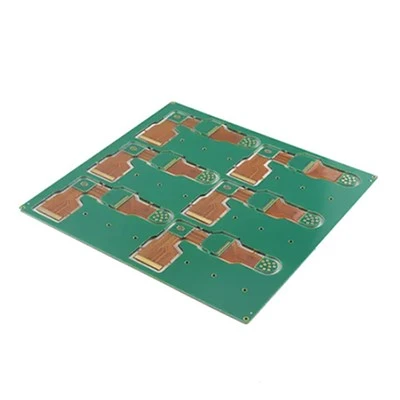
It’s a fair question. When it comes to medical equipment, the stakes are high. A faulty circuit board can delay a patient’s diagnosis, disrupt a life-saving treatment, or even compromise patient safety. For decades, medical device designers leaned toward more expensive, specialized PCB materials—like polyimide (PI) or ceramic PCBs—for their critical, frontline equipment. FR4, the workhorse PCB material that makes up over 90% of all PCBs globally, was written off as too generic, too prone to moisture damage, or non-compliant with strict medical industry standards. But over the last five years, I’ve seen that narrative shift dramatically, thanks to advances in FR4 manufacturing processes, evolving medical device needs, and a deeper understanding of what FR4 is capable of. Today, FR4 isn’t just a viable option for many medical applications—it’s often the most cost-effective, reliable choice for a wide range of devices.
Let’s start with the basics: what is FR4, exactly? FR4 stands for Flame Retardant 4, and it’s a composite material made of woven glass fibers soaked in epoxy resin. That glass-epoxy core gives it unmatched dimensional stability (it doesn’t warp or shift as temperatures change), excellent electrical insulation, and a low cost compared to specialty materials. Early FR4 formulations had a reputation for being brittle, absorbing moisture over time, and leaching chemicals when exposed to sterilization processes—all red flags for medical use. But modern FR4 grades, designed specifically for medical and aerospace applications, have fixed many of these gaps.
First, let’s address the biggest concern for medical PCBs: regulatory compliance. The medical device industry is governed by strict global standards, from the U.S. FDA’s 21 CFR Part 820 (Quality System Regulation) to the International Organization for Standardization’s ISO 13485, which sets requirements for medical device quality management systems. For PCB materials, the key is biocompatibility and freedom from harmful substances. Many people assume FR4 is automatically non-compliant because old consumer-grade FR4 uses halogenated flame retardants, but that’s no longer the case today. Medical-grade FR4 is formulated with halogen-free flame retardants, meets IPC 4101 requirements for electronic materials, and is often tested to ISO 10993 (the standard for biocompatibility in medical devices) to ensure it doesn’t cause skin irritation, toxic reactions, or leach harmful chemicals when exposed to bodily fluids or sterilization agents. As a supplier, we’ve worked with a number of clients who use our medical-grade FR4 PCBs in implantable devices, like cardiac pacemaker lead connectors and glucose sensor patches, with zero biocompatibility failures in their clinical trials. That’s a game-changer.
Next, let’s talk about performance. Medical devices operate in a wide range of environments, from a hospital’s climate-controlled operating room to a patient’s home, where they might be exposed to humidity, temperature fluctuations, and even accidental drops. FR4’s glass-epoxy core gives it excellent dimensional stability, which is critical for medical devices that require precise electrical connections. For example, a portable ultrasound transducer needs a PCB that maintains its shape when bent slightly (as the transducer is moved over a patient’s skin) and doesn’t shift its copper traces, which would cause signal loss or image distortion. We supply FR4 PCBs to a startup that makes hand-held ultrasound scanners for rural clinics, and they’ve reported that our FR4 boards hold up better under repeated use and temperature changes than the ceramic PCBs they tested initially. FR4 also has good thermal conductivity, which helps dissipate heat from components like microprocessors and sensors—an important feature for devices like patient monitors that run for 24/7.
Another common concern is sterilization. Many medical devices, especially those designed for repeated use (like surgical tools, dental equipment, or wound care devices), need to be sterilized between patients. Common sterilization methods include autoclaving (high-pressure steam), ethylene oxide (EtO) gas, or gamma irradiation. Early consumer-grade FR4 would degrade when exposed to these processes: it would yellow, crack, or absorb moisture, which would damage the circuit. But medical-grade FR4 is tested to withstand multiple cycles of sterilization. For example, our high-temperature FR4 grade can survive 50+ autoclave cycles at 121°C without warping or losing electrical performance. We also offer FR4 boards coated with a thin layer of parylene, a biocompatible polymer that provides an extra barrier against moisture, chemicals, and sterilization agents—perfect for devices that undergo EtO or gamma irradiation. A dental equipment client of ours uses these coated FR4 PCBs in their intraoral cameras, which are sterilized after every use, and they haven’t reported any board failures in three years of production.
Of course, FR4 isn’t the right choice for every medical application. There are scenarios where specialty materials are still necessary. For implantable devices that stay in the body long-term, like pacemakers or neurostimulators, polyimide or liquid crystal polymer (LCP) PCBs are often preferred because they’re more flexible and have even lower moisture absorption than FR4. Ceramic PCBs are used in high-power medical devices, like linear accelerators for radiation therapy, where FR4’s thermal conductivity is not sufficient to handle the extreme heat. And for very small, flexible devices like wearable fitness trackers that double as vital signs monitors, flexible PCBs (often made of PI) are lighter and more durable than rigid FR4 boards. But for the vast majority of medical devices on the market, FR4 checks all the boxes.
Let’s look at real-world examples to put this in perspective. Take the self-monitoring blood glucose (SMBG) meters that millions of people with diabetes use every day. These small, affordable devices have a single circuit board that powers the glucose sensor, reads the test strip, and displays the result. The entire device costs less than $50, and it’s disposable after the test strip is used. A specialty PCB would add $10 or more to the cost of each meter, making it unaffordable for the millions of people who rely on these devices in low-income countries. FR4 allows manufacturers to produce these devices at a cost that’s accessible, while still meeting FDA and ISO standards. Another example: portable pulse oximeters, the small clips that measure blood oxygen levels and heart rate. These are used in everything from home health kits to emergency medical vehicles, and they need to be durable, lightweight, and low-cost. FR4 PCBs are the standard here, and they’ve proven reliable in millions of units sold worldwide.
As a FR4 PCB supplier, I’ve also seen how manufacturers are choosing FR4 over specialty materials to reduce lead times and simplify their supply chains. Specialized PCB materials often require custom orders, longer lead times (sometimes 8-12 weeks), and higher minimum order quantities, which can be a problem for startups and small medical device companies that are bringing a new product to market. Medical-grade FR4 PCBs, on the other hand, can be delivered in 2-3 weeks with standard lead times, and we offer flexible order sizes from small prototype runs to large production batches. That’s a huge advantage for companies that need to test new designs quickly or scale up production as demand grows.
Of course, there are still best practices to follow when using FR4 in medical devices to ensure safety and reliability. First, always specify medical-grade FR4, not consumer-grade. Consumer-grade FR4 may have lower material costs, but it lacks the biocompatibility testing and sterilization resistance that medical devices require. Second, work with a PCB supplier that has experience manufacturing medical-grade PCBs. A good supplier will follow strict quality control processes, like in-circuit testing (ICT) and X-ray inspection, to catch defects before the boards are used in devices. Third, consider the device’s specific use case: if it’s a disposable device that only uses a few times, basic medical-grade FR4 is sufficient. If it’s a reusable device that needs to be sterilized, opt for a high-temperature FR4 or parylene coating.
I get it—when it comes to medical equipment, cutting corners on materials is never worth the risk. But modern FR4 is not the cheap, flimsy material it was 20 years ago. It’s a reliable, cost-effective, and regulatory-compliant option that works for thousands of medical devices. As the demand for affordable, portable medical care grows around the world, FR4 will only become more important. It’s the material that’s making SMBG meters accessible to people in remote villages, allowing small clinics to afford portable ultrasound scanners, and helping startups bring life-saving medical devices to market faster.

If you’re a medical device designer or manufacturer weighing your PCB material options, I’d encourage you to give medical-grade FR4 a closer look. It’s not a “lesser” alternative to specialty materials—it’s a mature, proven solution that balances performance, cost, and compliance. We’ve helped dozens of clients in medtech refine their designs, reduce production costs, and get their devices to market on time. Whether you’re working on a new prototype, scaling up production, or troubleshooting an existing device, we have the expertise to help you choose the right FR4 PCB for your specific medical application. Ready to discuss your project? Reach out to our team to learn more about our medical-grade FR4 options, quality processes, and lead times. We’re here to help you build devices that are safe, reliable, and accessible.
Multilayer FR4 PCB Board References
IPC-J-STD-004, Requirements for Soldering Fluxes
ISO 10993, Biological evaluation of medical devices
21 CFR Part 820, Quality System Regulation for Medical Devices
FR4 Material Specification IPC-4101/29, Flame Resistance, High Tg, Halogen-Free, for Medical Applications
Fastline Circuits Co., Limited
Fastline Circuits Co., Limited is one of the most professional FR4 PCB manufacturers and suppliers in China. With abundant experience, we warmly welcome you to wholesale durable FR4 PCB made in China here and get quotation from our factory. All customized products are with high quality and competitive price.
Address: Room 301, Building B3, Fuqiao 4th District, Qiaotou Community, Fuhai Subdistrict, Bao’an District, Shenzhen, Guangdong Province, China
E-mail: sales@fastlinepcb.com
WebSite: https://www.fastlinepcb.net/
