If you’ve ever had an AC servo motor trip the breaker out of nowhere in the middle of a production run, you know how much of a headache that is. I’ve been in the AC servo motor supply game for years, talking to shop managers, automation techs, and small business owners every week, and this is easily one of the most common questions I get: “Why the hell is my servo tripping the breaker?” It’s not just a random glitch, either—there are specific, fixable reasons behind it, and I’ll break them down like I would when I’m walking a customer through a problem on a call. AC Servo Motor

First, let’s get one thing straight: I’m not here to sell you a new motor out of the gate. Most of the time, the issue has nothing to do with the motor itself, which is why so many people waste money replacing parts that don’t need it. Let’s start with the simplest, most overlooked culprit: the breaker itself. I’ve seen this so many times, even with seasoned techs. A lot of shops use breakers that are sized just a little too tight for their AC servo setup. Wait, no—let me rephrase that. The NEC (National Electrical Code) says you should size breakers for 125% of the motor’s full load current (FLC), right? But some people cut corners to save a few bucks, slapping on a 10A breaker for a motor that pulls 9A FLC, thinking that’s enough. Except when the motor gets even a tiny surge—like when it starts up, or when a load kicks in hard—that breaker just can’t handle it, so it trips. Or, over time, breakers get worn out. Contacts get burned, the tripping mechanism gets finicky, and it’ll trip even when the motor is totally fine. Last month, a customer drove two hours just to show me his “broken” servo, and it turned out his breaker was 10 years old—we swapped it for a 15A properly sized one, and it hasn’t tripped since. That’s a no-brainer, but it’s the first thing I check every time.
Next, let’s talk about wiring. AC servo motors run on specific voltage, and most of them are 120V or 240V, but if you’ve got loose, frayed, or wrong gauge wires, that’s a huge issue. Here’s the thing: if your wires are too small (too low a gauge), they can’t carry the current the motor needs, so they heat up. That heat causes the breaker to sense an overload and trip. I’ve seen people use 18-gauge wire for a motor that calls for 14-gauge—cheaper wire, sure, but it’s not enough for the load. Also, loose connections at the breaker or the motor terminals: when a wire wiggles loose, it creates what’s called “high resistance” at the connection point. That resistance turns into heat, which builds up, and boom—breaker trips. A lot of times, people don’t even think to check the terminals because they assume wiring is “set it and forget it.” But in industrial settings, where there’s vibration from machines, wires can loosen in a matter of weeks. Last quarter, I had a plant manager tell me his servo was tripping every hour, and it turned out one of the power wires at the motor end was just barely hanging on. We tightened it, and the problem was gone. Wild, right?
Now, let’s get to the motor itself, because sometimes the issue is on the motor side. One big one is overloading the motor. AC servo motors are designed to handle a peak load for short periods, but if you’re running them at continuous overload—like pushing a 50lb load when the motor is only rated for 30lb—they pull way more current than they’re supposed to. That extra current doesn’t just trip the breaker; it’s bad for the motor’s windings long-term. I once had a customer who was using a standard servo motor to lift heavy pallets in a warehouse, and he kept tripping breakers until we pointed him to a higher-torque servo motor built for continuous heavy loads. He swapped it, and no more trips. Another motor issue is winding damage. If the motor has old, worn windings, or if moisture got in there (say, a leaky line nearby), the insulation on the windings can break down. That causes a short circuit inside the motor—basically, current is leaking where it shouldn’t, so the breaker sees a huge spike and trips immediately. How do you spot that? If the motor smells like burnt insulation when it runs, or if it’s making weird humming noises instead of a smooth hum, that’s a sign windings are shot.
Then there’s the driver (the servo drive, for anyone who doesn’t know) side of things, which ties into the motor’s operation. The servo drive is what controls the motor’s speed and torque, so if the drive is set wrong, that can make the motor pull too much current. For example, if your acceleration time is set way too short—you’re cranking the motor from 0 to full speed in half a second—that creates a massive inrush of current. That inrush is normal for a second, but if the breaker is sized just right, it can’t handle that spike and trips. I always tell customers, if you’re tweaking drive settings, take it slow. Don’t crank acceleration up to max right away. Another drive issue: bad ground. AC servo motors need a proper ground to function safely, and if the ground wire is missing, loose, or has high resistance, that can cause current to leak. Sometimes that leak is small enough you don’t notice it, but it’s enough to trip the breaker. I had a small CNC shop owner who was fighting this for months; he thought his motor was bad, but it turned out the ground rod for his whole shop was only 3ft deep, which is way too shallow for proper grounding. We had an electrician drive a new, deeper ground, and the trips stopped.
Wait, let’s also talk about environmental factors, because people sleep on that. If your servo is in a super hot space—like a metal enclosure in a factory that’s 100°F or more—heat makes the motor’s internal resistance go down, so it pulls more current. That extra current can trip the breaker, even if the motor is rated for that load in cooler temps. Also, dust and debris getting into the motor can clog the vents, so it can’t cool itself. I had a customer who ran a servo in a woodworking shop; sawdust built up in the motor’s vents over a year, and it overheated, causing the breaker to trip every time he ran a long cut. A quick cleaning with compressed air fixed it. Even condensation in cold environments can mess things up—moisture on the motor’s terminals creates a short, which trips the breaker.
Now, before you go and panic that your whole setup is broken, let’s walk through a quick troubleshooting checklist I give every customer: first, check the breaker size and condition—make sure it’s at 125% of the motor’s FLC, and if it’s over 5 years old, replace it. Second, inspect all wiring: check gauge size (match the motor’s specs), tighten all terminals, look for frays or damage. Third, test the servo drive settings—slow down acceleration, make sure the ground is solid. Fourth, check the motor for signs of overheating (burnt smell, unusual noise) or physical damage (moisture, dust). Most of the time, one of these steps will fix the problem, no new motor needed.
If you’ve gone through all that and it’s still tripping, then yeah, maybe the motor is the issue. But that’s what we’re here for. I don’t just sell AC servo motors; I work with customers to figure out exactly what they need, so they don’t waste money on parts that won’t help. Whether you’re a small shop with a single CNC machine, or a big factory with dozens of servos, I’ve seen almost every angle of this problem.
I know how frustrating it is when a trip brings your production to a halt. You’re not just losing time—you’re losing money, holding up orders, and dealing with your team asking why the machine’s broken again. That’s why I make it a point to talk through every step with customers, no matter how small their setup is. If you’ve tried the basic checks and the breaker’s still tripping, or if you’re planning to upgrade your servo setup to avoid these issues down the line, we can work together to find the right solution for your needs. No pushy sales talk, no jargon that makes your head hurt—just straight talk about what will work for your shop.
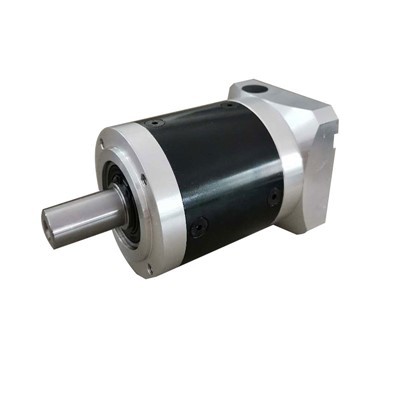
It’s been years of hearing these same frustrations from customers, and that’s why I’m happy to walk through any specific issues you’re having. At the end of the day, a tripping breaker doesn’t have to mean a major overhaul. Most of the time, it’s a small, easy fix—you just need someone who knows the AC servo space well enough to point you in the right direction. If you’re ready to figure out what’s causing your tripping breaker, or if you want to explore better servo options for your operation, reach out to connect and chat through the details.
DC Motor References
- National Electrical Code (NEC) Article 430, Motors, Motor Circuits, and Controllers
- Siemens Industrial Automation, “AC Servo Motor Troubleshooting Guide”
- Automation Direct, “Sizing Circuit Breakers for AC Servo Motors”
- Parker Hannifin, “Common AC Servo Motor Failures and Solutions”
Zibo Auric Mechanical and Electrical Technology Co., Ltd.
As one of the leading ac servo motor manufacturers and suppliers in China, we warmly welcome you to buy advanced ac servo motor for sale here from our factory. All customized motors are with high quality and competitive price.
Address: B419, High-tech Entrepreneurship Park, High-tech Zone, Zibo City
E-mail: cui@auricmotor.com
WebSite: https://www.auricmotor.com/
