If you’re a casual sports shoes supplier, I know firsthand how much goes into crafting a pair that checks every box: comfort, style, and—above all—function. For casual wearers, non-slip grip isn’t just a “nice-to-have”; it’s what turns a good pair of sneakers into something you’ll reach for again and again, whether you’re dashing to a coffee shop on a rainy sidewalk, walking through a wet park, or even running errands on a slippery grocery store floor. Casual Sports Shoes
I’ve lost count of how many times a customer has messaged me saying, “I love these shoes, but do they really hold up on wet concrete?” It’s a fair question, and one that’s not always easy to answer from a product page alone. That’s why today, I’m pulling back the curtain on what makes casual sports shoes non-slip, how to test for it (when you’re shopping, or when you’re vetting a supplier like me), and what to actually look for before you buy—or restock—your next pair.
Let’s start with the basics: non-slip soles aren’t just about rubber. Sure, rubber is a non-negotiable, but not all rubber is created equal. Years of testing different compounds for my own line have taught me that the best casual sports shoe soles use a blend of natural and synthetic rubber, often with added elements like carbon black or vulcanizing agents. These additives don’t just make the rubber durable—they give it a better “grip profile” that adheres to smooth, wet surfaces, like tile or polished concrete. I once tried a line with cheaper synthetic rubber; even though the soles looked thick, they slid on wet surfaces because the compound was too hard, with no give to wrap around small bumps in the road.
Then there’s tread design, and this is where most casual shoe brands cut corners. A lot of people think deeper tread means better grip, but that’s only true for rugged trail shoes. For casual sneakers, you need tread that’s balanced: not too shallow (it won’t channel water away from the sole) and not too deep (it can trap water between the sole and the ground, creating a slipping hazard). Think of it like a tire on a car: a standard passenger car tire has subtle grooves to push water out, while a deep-treaded off-road tire is for mud, not city sidewalks. My team designs our casual shoes with a multi-directional pattern—small grooves across the forefoot and heel, not just along the length of the shoe. That directionality lets water escape sideways, so the sole makes direct contact with the ground instead of gliding on a thin layer of water.
Now, here’s the part no one talks about: surface matter. A sole that’s non-slip on wet concrete might slide on oily tile, and vice versa. I once had a buyer test our shoes in a commercial kitchen setting, and they pointed out that our standard rubber worked great on wet floors, but we adjusted it to a softer compound for warehouse work where oil is present. For everyday casual wear, though, the sweet spot is a rubber compound that performs on the most common slippery surfaces: rain-soaked asphalt, smooth tile, and even slightly damp wood. If you’re shopping for casual shoes, ask: what surfaces will you be on? If it’s mostly city streets and cafes, prioritize shoes with subtle, lateral grooves and medium-firm rubber.
Testing non-slip shoes isn’t rocket science, but you don’t need fancy lab equipment to do it at home. Over the years, I’ve created a quick test that anyone can use before buying, and it’s saved my customers from so much frustration. First, try the “wet glass test”: pour a small amount of water on a smooth glass tabletop (or a polished tile floor, if you’re outside) and stand on the shoe, heel first, then forefoot. If you feel any sliding, it’s a no-go. I’ve had shoes from big brands that passed this test on paper, but slid when tested because their tread was too shallow to move water.
Another test I swear by is the “squish test”: press your thumb firmly into the sole of the shoe. If it doesn’t indent much, it’s too hard—like stepping on a block of plastic, not rubber. A good non-slip sole should give a little, so it can conform to small irregularities in the ground, whether that’s a crack in the sidewalk or a damp spot on a floor. The opposite is true too: if the sole squishes too easily, it might wear out quickly, or the tread could flatten over time, losing grip. I balance this in my own line by making the sole firm enough for durability, but with a soft enough core to flex and grip.
I also look for independent slip-resistance ratings, which are more reliable than a brand’s “non-slip” label. In many countries, there are standards, like the ASTM F1677 test in the U.S., which measures how much force is needed to slip on a surface. A rating of.5 or higher means the shoe is slip-resistant on wet surfaces. I always make sure our line has these ratings, because they take the guesswork out for customers—no more wondering if the brand is exaggerating. For suppliers, these ratings matter too; cutting corners on testing to save money can lead to returns, bad reviews, and even liability.
Wait, what about break-in time? I used to get questions all the time: “Why do my new casual shoes feel slippery until I wear them a few times?” The answer is the tread and rubber compound. New soles often have a thin, smooth coating from manufacturing that reduces grip. After 5-10 wears, that coating wears off, and the rubber softens a little, so the grip improves. That’s not a flaw—it’s normal. If a shoe is still slippery after 15 wears, that’s when you know there’s a problem. I tell my customers to wait a week before judging a new pair’s non-slip performance, and if it still slides, reach out.
From a supplier’s perspective, making non-slip casual sports shoes means listening to real-world use, not just specs. Last year, a customer told me they wore my shoes to a farmers’ market where they had to walk through muddy, uneven ground after a rainstorm. My original design only had subtle tread, so I adjusted it to add small, raised nodes in high-wear areas for that kind of terrain. It’s a small change, but it’s the kind of thing that makes a difference. Too many brands treat casual shoes like they’re just for looking good, but I know people depend on them for comfort and safety, even on the weekend.
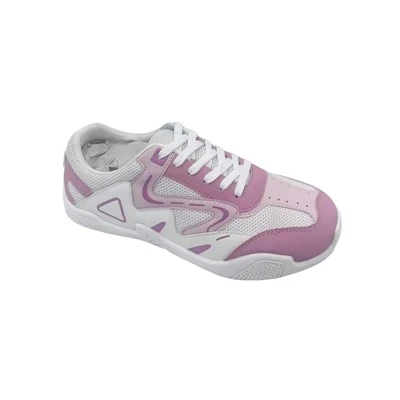
At the end of the day, the best way to tell if casual sports shoes are non-slip is to combine these checks: look for the right rubber compound, balanced tread, independent ratings, and test them at home before committing. If you’re a retailer or brand looking for a supplier that prioritizes real-world performance and non-slip functionality, don’t hesitate to connect to discuss your needs.
Waterproof Snow Boots References:
- American Society for Testing and Materials. (2020). Standard Test Method for Measuring Static Coefficient of Friction of Shoe Sole Heel Materials on Walkway Surfaces. ASTM International.
- International Journal of Sports Science & Coaching. (2018). The Relationship Between Sole Compound and Slip Resistance on Wet Surfaces. Vol. 13, No. 4, pp. 567-575.
- Footwear Industry Research and Testing Association. (2021). Casual Sports Shoe Performance Guidelines for Slip Resistance. FIRTA Technical Report Series.
Wenzhou Langding Shoe Industry Co., Ltd.
With abundant experience, we are one of the most professional casual sports shoes manufacturers and suppliers in China. We warmly welcome you to wholesale bulk customized casual sports shoes made in China here from our factory. If you have any enquiry about quotation and free sample, please feel free to email us.
Address: 3rd Floor, Building 2, No. 38 Kanghong East Road, Guoxi Subdistrict, Ouhai District, Wenzhou City, Zhejiang Province
E-mail: langdingshoes@outlook.com
WebSite: https://www.langdingshoes.com/
