If you’ve ever stood in a garage, holding a crumpled invoice for diesel engine repairs, or stared at a fuel injection pump that’s been sputtering for weeks, you know how elusive repair costs can feel. As a supplier of fuel injection pumps, I get dozens of calls a week from mechanics, fleet managers, and small truck owners asking the same question: “How much does it actually cost to fix my fuel injection pump?” It’s not a one-size-fits-all number—and if you’re expecting a straight, round dollar figure, I’ll save you the frustration: it depends on a dozen factors, from the pump’s type and age to the quality of parts you choose, and even where you get the work done. Let’s break this down, straight from the team that builds and supplies these pumps every day, no sales pitch, just real-world numbers and truths. Fuel Injection Pump
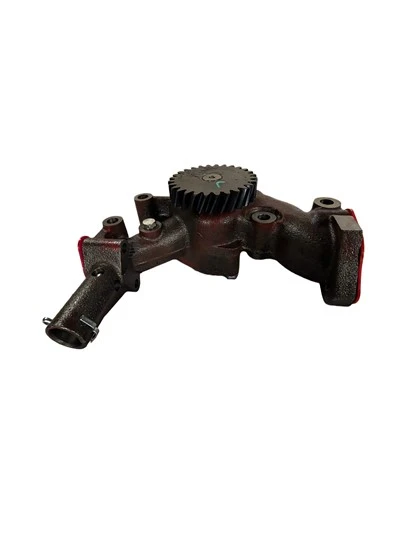
First, let’s start with the basics: what a fuel injection pump repair actually entails. These pumps are the heart of diesel engines, regulating the high-pressure fuel that gets sent to the injectors. When they fail, it’s rarely a single part—usually a mix of wear-and-tear: stuck plungers, worn seals, corroded internal components, or a faulty pressure regulator. A “repair” doesn’t always mean fixing the whole pump; sometimes it’s a rebuild of worn parts, sometimes it’s replacing individual components, and occasionally, if the damage is too severe, the only viable option is a new or remanufactured pump. That’s why cost varies so widely.
Let’s ground this in real numbers we see from our clients, from small farm truck owners to 18-wheeler fleet managers. For light-duty diesel pumps, the kind used in pickups like Ford F-250s, Ram 2500s, or older Duramax models, repair costs usually sit between $300 and $1,200. Wait, that’s a huge gap—let’s explain. A minor repair for a light-duty pump, like replacing a worn seal kit or cleaning a clogged pressure valve, might only run $300 to $500. That includes parts (a quality seal kit runs $100 to $150, not the cheap imported ones that fail in 6 months) and labor (most mechanics charge $100 to $150 an hour, and a minor repair takes 1 to 2 hours). But if the pump has more significant wear, like a scored plunger or a faulty camshaft drive gear, that’s where costs jump. Replacing a plunger assembly alone can run $400 to $600 in parts, plus another 2 to 3 hours of labor, pushing that repair to $800 to $1,200.
Now, heavy-duty fuel injection pumps, the ones used in semi-trucks, construction equipment, or agricultural tractors, are a different ballgame. These pumps have far higher precision parts, often custom-calibrated for specific engine models, so repair costs here are typically between $1,500 and $4,500. A minor repair for a heavy-duty pump might be around $1,500: replacing an o-ring set, a pressure sensor, or a small actuator. But major repairs—like rebuilding the plunger and barrel assembly, which is the core of the pump—can hit $3,000 to $4,500. That’s because the plunger and barrel for a heavy-duty pump aren’t generic; they’re machined to tolerances of a few microns, and a single precision set can cost $1,200 to $2,000 in quality parts. Add 4 to 6 hours of specialized labor (heavy-duty pump repair isn’t for a beginner mechanic—it requires calibration tools most small garages don’t have) and that number adds up fast.
But wait, there’s a cheaper option some people miss: remanufactured pumps, not full new pumps. A lot of folks think repair means fixing their old pump, but remanufactured pumps go through a full teardown, inspection, and replacement of all worn parts, calibrated to factory specs. For light-duty pumps, a remanufactured pump runs $800 to $1,800, which is often more expensive than a repair, but it comes with a warranty (usually 12 to 24 months) and avoids the risk of your old pump failing again in a few months. For heavy-duty pumps, remanufactured models run $2,500 to $5,500—again, pricier than a repair, but a good middle ground between a fix and a brand-new pump, which for heavy-duty can run $6,000 or more.
Now, let’s talk about the factors that make these numbers swing, because they matter more than you think. First, the quality of parts used. A lot of independent garages will use cheap, aftermarket parts to keep labor costs low, but those parts often fail faster. For example, a $15 seal kit from a no-name supplier might last 6 months, while a OEM-spec kit runs $120 and lasts 5 years. That’s why a repair that seems cheap upfront might end up costing you twice as much in repeat fixes. At our company, we only supply OEM-grade or better parts for repairs, so we can tell you that a $500 repair with quality parts will outlast a $300 repair with cheap parts.
Second, labor rates. A dealership will charge $150 to $200 an hour, while an independent specialty diesel shop might charge $100 to $150 an hour. That’s a $100 difference an hour, so a 3-hour repair is $300 cheaper at the independent shop. But there’s a catch: not all shops have the calibration equipment for modern common-rail fuel injection pumps (the most common type on new diesels). If your pump is a common-rail model, you need a shop that has the computerized tools to calibrate the fuel pressure to factory specs—skipping that calibration will lead to poor fuel efficiency, engine misfires, or even damage to injectors. That specialized labor is non-negotiable, so you can’t cut corners there.
Third, whether you repair or replace the pump. A lot of people will try to patch a pump that’s too far gone, to save money, but that’s a mistake. If your pump has cracked castings, bent drive gears, or internal corrosion from bad fuel, repair is not feasible. In that case, you’re looking at a full replacement, which for a light-duty pump is $1,500 to $3,500, and for heavy-duty, $5,000 to $8,000. We see this all the time: a customer spends $400 on a “cheap repair” that lasts 3 months, then has to spend $2,000 on a replacement anyway. It’s better to get a professional diagnostic first—most shops will do a pressure test on your fuel system for $50 to $100, which will tell you if a repair is possible or if you need a new pump.
Another thing a lot of people don’t consider: fuel type and engine model. Older mechanical fuel injection pumps (pre-2007) are far simpler to repair, so costs are 20% to 30% lower than modern common-rail pumps (post-2007). Common-rail pumps have electronic sensors, high-pressure chambers, and complex solenoids, so repairs require more parts and more labor. For example, a mechanical pump repair for a 2005 F-350 is around $400, while a common-rail pump repair for a 2015 F-350 is around $800. That’s a big difference, and it’s all because of the technology in newer engines.
Now, let’s answer the question we get most: is it worth repairing a fuel injection pump, or should I just replace it? The short answer: if your pump is less than 10 years old, and the damage is only to internal seals, plungers, or sensors, repairing it is almost always worth it. A good repair will cost half or less than a new pump, and if done right, it will last as long as a replacement. But if your pump is over 15 years old, or has major structural damage (like a cracked housing), replacing it is the better long-term bet. We recently had a customer whose 20-year-old tractor had a pump that would cost $1,000 to repair, but a remanufactured pump from us was $1,800, with a 2-year warranty. He ended up going with the remanufactured one, because he knew his tractor would last another 5 years, and the warranty gave him peace of mind.
Let’s also talk about hidden costs that no one tells you about. When you get a fuel injection pump repair, you might have to replace other parts too. For example, if your pump is failing, it’s often because of dirty fuel or a clogged fuel filter that put extra stress on the pump. So if you just repair the pump without replacing the filter, you’re almost guaranteed to have the same problem in a few months. Also, a bad fuel injection pump can damage the injectors, so if you ignore that, you’ll have to pay for injector repairs or replacements too—adding $500 to $1,500 to your total cost. We always recommend that our customers get a full fuel system check when they get a pump repair, to avoid those hidden costs.
Now, let’s get specific with sample scenarios, because numbers are meaningless without context. Scenario 1: 2008 Ram 2500, 6.7L Cummins, mechanical pump. Sputtering at idle, mechanic does a pressure test and finds a stuck pressure valve. Repair: replace pressure valve and seal kit. Parts: $120, labor: 1.5 hours at $120/hour = $180. Total cost: $300. That’s on the low end, but it’s a common repair for older mechanical pumps. Scenario 2: 2018 Ford F-250, 6.7L Power Stroke, common-rail pump. Check engine light on, code for low fuel pressure. Diagnostic reveals worn plunger in the pump. Repair: replace plunger and barrel assembly, plus a new fuel filter. Parts: $650, labor: 3 hours at $140/hour = $420. Total cost: $1,070. That’s a typical mid-range repair for a modern common-rail pump. Scenario 3: 2020 Kenworth semi, heavy-duty common-rail pump. Pump is making a loud whine, pressure is inconsistent. Repair: rebuild core components (plunger, actuator, pressure regulator). Parts: $1,800, labor: 5 hours at $150/hour = $750. Total cost: $2,550. That’s a mid-range repair for a heavy-duty pump.
Now, what can you do to keep fuel injection pump repair costs low? First, regular maintenance. Changing your fuel filter every 10,000 to 15,000 miles, using quality fuel, and having your fuel system checked every 2 years will extend the life of your pump by 50% or more. We have a lot of customers who come to us with pumps that failed because they skipped fuel filter changes—if they’d just spent $50 on a filter every year, they wouldn’t have needed a $1,000 repair. Second, get a diagnostic early. If you notice sputtering, low power, or poor fuel efficiency, don’t wait until the pump fails entirely. A diagnostic at the first sign of trouble will cost $50 to $100, but it can save you hundreds or thousands in repairs later. Third, choose quality parts. It’s tempting to go for the cheapest repair, but as we said, cheap parts lead to repeat costs. At our company, we supply quality parts for repairs, so you can get a repair that’s built to last, not just to get you by.
At the end of the day, the cost of repairing a fuel injection pump isn’t a random number—it’s a reflection of the pump’s age, type, and the quality of work and parts you choose. For light-duty pumps, expect $300 to $1,200; for heavy-duty, $1,500 to $4,500. But don’t let these numbers scare you—getting a proper diagnostic from a trusted shop, choosing quality parts, and staying on top of maintenance will not only save you money in the long run, it will keep your engine running smoothly for years.
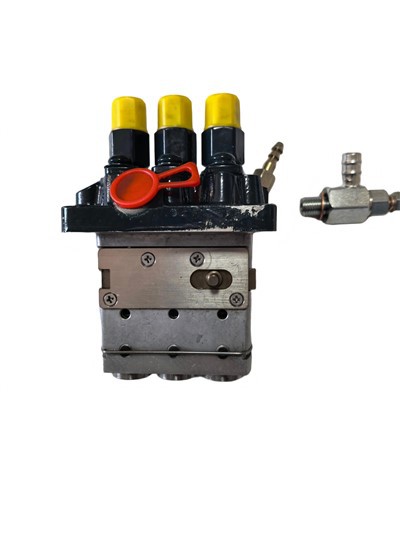
If you’re dealing with a fuel injection pump issue, or you’re ready to source quality parts for your repair, reach out to our team to discuss your specific needs. We can help you with diagnostics, part sourcing, and guidance on the best options for your engine and budget. Let’s work together to get your engine back on the road without breaking the bank.
Crankshaft References:
- Diesel Technology Forum. (2022). Common Fuel Injection System Maintenance Guidelines for Medium and Heavy-Duty Engines. Retrieved from industry technical publications.
- Automotive Repair Association. (2023). Labor Rate Benchmarks for Diesel Repair Services in North America.
- Society of Automotive Engineers. (2021). Tolerance Standards for Precision Fuel Injection Pump Components.
- National Institute for Automotive Service Excellence. (2022). Guidelines for Fuel System Diagnostic Testing and Repair.
Xingtai Haoheng Trading Co., Ltd.
Xingtai Haoheng Trading Co., Ltd. is one of the most professional fuel injection pump manufacturers and suppliers in China, specialized in providing high quality auto parts made in China. We warmly welcome you to wholesale discount fuel injection pump in stock here from our factory. For customized service, contact us now.
Address: No.88, Quannan Street, Shangquancheng, Xingtai, Hebei, China.
E-mail: Zhang@hauhen.com
WebSite: https://www.xtengineparts.com/
