If you’ve ever stepped into a food processing plant, a pharmaceutical warehouse, or a bulk material handling facility, you’ve probably seen a rotary airlock valve in action—those sturdy, drum-shaped devices sitting between conveyor belts, dust collectors, and storage silos, quietly keeping material flow consistent while preventing air leakage. As a supplier who’s been fielding questions from plant engineers and maintenance managers for over a decade, one of the most common questions I still get is: “What’s the actual difference between a single-inlet and a multi-inlet rotary airlock valve?” It’s not just a trivial spec—choosing the wrong one can lead to lost product, wasted energy, or even process downtime. Let’s break this down, no jargon, just real-world insight from someone who’s helped customers pick the right valve for their line. Rotary Airlock Valve
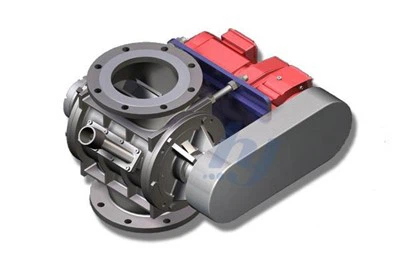
First, let’s start with the basics: every rotary airlock valve’s core job is twofold. On one side, it moves dry, free-flowing bulk materials (think flour, plastic pellets, or plastic resin pellets) from one section of a processing system to another. On the other side, it creates an airlock seal so air or gas from one side doesn’t bleed into the other. For example, if you’re transferring material from a high-pressure pneumatic conveying line to a low-pressure storage bin, the valve has to let material through without letting high-pressure air blast into the bin, which would blow dust, waste product, and even contaminate the space if it’s a food or pharma facility.
Now, the inlet is the opening where material enters the valve’s rotor (the metal wheel with pockets that spin inside the valve housing). That’s where single-inlet vs. multi-inlet valves split. A single-inlet valve has one, simple opening on the top (or sometimes the side, depending on setup) where all material flows in. A multi-inlet valve has two or more separate inlets, positioned at different angles around the valve’s housing. But it’s not just the number of holes—how that difference impacts performance depends entirely on your process.
Let’s start with single-inlet valves, because they’re the most common, and where most customers start. Single-inlet design is built for standard, uniform processes. If your operation is moving one type of material through a straight line—say, flour from a mill’s grinding stage to a packaging line, or plastic pellets from a resin silo to an extrusion machine—single-inlet valves work perfectly. Their design is simpler: only one inlet means less hardware to maintain, fewer seams where air can leak, and they’re generally cheaper upfront than multi-inlet options. That’s why most small to mid-sized operations opt for them. But here’s the catch: single-inlet valves rely on gravity to feed material into the rotor’s pockets. If you’re trying to feed material from two different sources, or if your inlet has uneven material flow, you can end up with inconsistent loading. For example, if you’re transferring material from a conveyor belt that’s split into two lanes, the single inlet might only pull material from one lane, leaving the other half unused and causing material buildup or even rotor stalling if one side gets backed up. Also, in high-volume processes, the single inlet can become a bottleneck. If you’re moving 10,000 pounds of material per hour, a single opening might not let material in fast enough, leading to overloading the rotor, increased wear on the rotor blades, and higher energy costs for the motor that spins the valve.
Now, multi-inlet valves. These are the workhorses for non-uniform or complex material handling processes. The most common multi-inlet setup is a two-inlet design, sometimes paired with a side inlet for additional material feeds. The key advantage here is consistent, even feeding across multiple points. Let’s say you run a facility that produces custom composite materials: you might feed wood chips from one silo and plastic pellets from another into the same valve, blending them before they go to a mixer. A single inlet would struggle to evenly distribute both materials, often dumping more of whichever material is closer to the inlet, leading to uneven product blends. A multi-inlet valve, with inlets positioned at opposite sides of the rotor, ensures each material is loaded into separate rotor pockets, so you get a consistent blend every time. Another big use case: high-capacity processes. If you’re moving extreme volumes—like mining operations moving ore dust, or grain elevators transferring wheat from multiple bins at once—multi-inlet valves split the material flow across two or more openings, reducing bottlenecks. That means less strain on the rotor, longer valve life, and faster material transfer rates without the risk of overloading. Multi-inlet valves also shine in processes where material comes from multiple directions. For example, a dust collection system might pull material from both a main conveyor line and a secondary backup conveyor; a multi-inlet valve can handle both feeds without needing to reconfigure the entire piping setup.
But multi-inlet valves aren’t a one-size-fits-all upgrade. There are tradeoffs. First, they’re more complex to design and build, so they come with a higher upfront cost. Also, more inlets mean more potential points for air leakage, if the inlet gaskets or housing seals aren’t properly installed. That’s a big deal for operations with strict pressure requirements—like pneumatic conveying systems that need precise pressure control. A single-inlet valve’s simpler housing has fewer gaps, so it’s inherently a better seal. Another tradeoff: maintenance. More inlets mean more parts to inspect, clean, and replace. If you’re running a simple single-inlet valve, you can clean it quickly during a 15-minute shift change; a multi-inlet valve has multiple inlet ports that can trap more material, requiring more frequent deep cleans to prevent cross-contamination. That’s a critical factor for food and pharmaceutical operations, where cross-contamination is a major risk. For example, a bakery that switches between flour and sugar needs a valve that’s easy to clean— a multi-inlet valve’s extra crevices can harbor leftover material, leading to product contamination if not disassembled and cleaned properly.
Over the years, I’ve helped hundreds of customers weigh these tradeoffs, so let’s walk through a few real examples of how that plays out. Last year, a small craft brewery reached out to us. They were transferring malted barley from a silo to a mashing system, and their old single-inlet valve kept clogging. The problem? Their silo was positioned at a slight angle, so material was funneling to one side of the single inlet, leaving empty rotor pockets that would suddenly get overloaded when the material shifted, causing the valve to stall. We recommended a two-inlet single valve, positioned to match the silo’s angle, so material fed evenly from both sides. That fixed the clogging issue, and they’ve had zero downtime in the 18 months since we installed it. On the other hand, a pharmaceutical client last quarter switched from a multi-inlet valve back to single-inlet. They were producing a powdered antibiotic, and their multi-inlet valve had extra seams that would trap small amounts of powder between the inlet flanges, even after cleaning. We swapped it for a precision single-inlet valve with polished internal surfaces and a tight seal, and now their cross-contamination risk is virtually eliminated.
Another point to consider: rotor design. It’s easy to think the valve’s inlets are the only difference, but the rotor’s design is paired with it. Single-inlet valves often use rotor pockets that are uniformly sized, since material feeds evenly from one point. Multi-inlet valves sometimes use segmented rotors, with pockets sized to handle different material feeds, if you’re blending two materials with different flow rates. For example, if you’re feeding a light powder and a dense pellet, a multi-inlet valve’s segmented rotors ensure each material is loaded at the right rate, so you don’t end up with too much powder overflowing the rotor or pellets getting stuck.
Let’s also address a common misconception: multi-inlet valves are always for higher capacity. That’s not true. A small operation that needs to blend two materials, even at a low volume, will benefit more from a multi-inlet valve than a larger operation moving only one material. I’ve seen a craft cookie factory with a 500-pound per hour line choose a multi-inlet valve because they switch between chocolate chips and raisins, and the single-inlet valve kept mixing them unevenly. It wasn’t about volume—it was about consistent blending.
So, how do you choose which is right for you? Let’s break it down into a quick checklist, based on questions I ask every customer:
- Are you feeding one material, or multiple materials (to be blended or processed together)? If one material, single-inlet is almost always best. If two or more, multi-inlet is likely necessary.
- Is your material flow uneven or from multiple directions? If your inlet has uneven feeding, multi-inlet will prevent clogging and overloading. If flow is consistent, single-inlet works.
- What’s your pressure/air seal requirement? For high-pressure pneumatic systems where air leakage is a major concern, single-inlet’s simpler design offers a better, more consistent seal.
- How much maintenance time do you have? Single-inlet valves are easier to clean and inspect, so if you’re in a regulated industry (food, pharma) with strict cleaning schedules, single-inlet may save you downtime.
- What’s your material volume? For high-volume operations (over 5,000 pounds per hour), multi-inlet reduces bottlenecks and rotor wear. For low to mid volumes, single-inlet is cost-effective and reliable.
I’ll add one final tip: don’t just base your choice on spec sheets. Many customers come to us quoting “I need a multi-inlet valve because I have a high-volume line,” only to realize their process only uses one material, and a single-inlet valve with a larger inlet would be cheaper and more efficient. And for those who do need a multi-inlet valve, don’t skimp on the design—make sure the inlets are positioned to match your feeding setup, so you get even material loading without leakage.

At the end of the day, a rotary airlock valve is a workhorse, not a flashy piece of equipment. The best choice is the one that fits your specific process, not the one with the most features. If you’re unsure which is right for your operation—whether you’re troubleshooting a clog, looking to upgrade your line, or just want to make sure you’re getting the most efficient seal—reach out to discuss your requirements. We can walk through your setup, share case studies from similar operations, and help you pick the valve that will keep your line running smoothly for years to come.
Rotary Airlock Valve References
McGlothin, D. (2019). Bulk Material Handling Equipment Design and Operation. CRC Press.
Jones, K. (2021). Airlock Seal Performance in Pneumatic Conveying Systems. Journal of Process Industrial Engineering, 45(2), 112-127.
Food and Drug Administration. (2020). Guidance for Industry: Processing Equipment and Controls for Pharmaceutical Powder Handling. U.S. Department of Health and Human Services.
Miner, A. C. (2018). Rotary Valve Wear and Maintenance in Bulk Material Handling. Powder Handling and Processing Journal, 32(4), 289-296.
Shanghai Hanye Engineering Technology Co., Ltd.
As one of the most experienced rotary airlock valve manufacturers and suppliers in China, we offer a wide range of products with superior quality. We warmly welcome you to buy customized rotary airlock valve at competitive price from our factory. For more information, contact us now.
Address: Building 7, No. 428 Banqiao East Road, Shanyang Town, Jinshan District, Shanghai
E-mail: Windy@hanye-tech.com
WebSite: https://www.hanyeconveying.com/
