Hey there, construction pros and DIY enthusiasts! If you’ve ever worked on a build—whether it’s a tiny backyard shed or a multi-story commercial project—you know formwork is make-or-break for getting that concrete shape right. But let’s be real, formwork doesn’t hold itself together. That’s where formwork clamps come in, and trust me, not all clamps are created equal. As a supplier who’s been hooking builders up with the right gear for years, I’ve seen guys grab the wrong clamp and end up with warped forms, uneven concrete, and way more headaches than they signed up for. So today, let’s break down the main types of formwork clamps, what they’re for, and how to pick the one that actually works for your job. Formwork Clamp
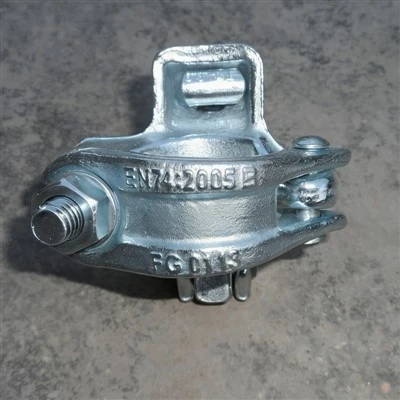
First, let’s keep it simple: formwork clamps exist to secure form panels (usually made of plywood, steel, or timber) tightly so when you pour concrete, the pressure doesn’t push the forms apart or buckle. Skip the generic bar clamps here—these are built for repetitive, heavy-duty use, not just holding a picture frame. Now, let’s dive into the most common types you’ll run into on job sites.
Starting with the workhorse of the bunch: the Side Pressure Clamp. This is the clamp you see everywhere on wall formwork, column forms, and even foundation walls. Why “side pressure”? Because it’s designed to counteract the horizontal force that wet concrete exerts on form panels. These clamps wrap around the outside edge of two adjacent form panels, tightening to pull them flush together so no concrete seeps out the gaps. The cool thing about side pressure clamps is their versatility—you can adjust them for different thicknesses of form panels, and some have quick-release levers to speed up form stripping later. I’ve had a lot of first-time builders mix these up with beam clamps, but no—beam clamps lift, side pressure clamps pull. For walls, I always recommend these for their consistent hold; I’ve seen projects cut corners with cheaper side clamps and end up with “honeycombed” concrete from tiny leaks that ruin the whole finish.
Next up, the Dead End Clamp. Wait, no, not the kind with a dramatic plot twist—this is the one you use on the ends of form runs where there’s no adjacent panel to tie into. Think about the end of a foundation wall: you can’t wrap a regular side clamp around a single end panel, so a dead end clamp secures that panel to a steel or timber walers (the horizontal beams that distribute concrete pressure). It’s like a giant clamp that grips the end of the form panel and fastens to the walers, keeping that end from bowing out. A lot of new contractors forget these on smaller jobs, and suddenly their end form is bulging so bad they have to chip off extra concrete later. Pro tip: pair dead end clamps with heavy-duty walers for pours over 10 feet high—they don’t skimp on pressure, and neither should you.
Then there’s the Spiral Clamp (sometimes called a Tension Clamp, but spiral is more spot-on for how it works). These are the weird, twisting clamps you see for round columns or curved formwork. Wait, let me explain: if you’re pouring a cylindrical column, flat panels won’t work—you need curved forms that seal tight, and spiral clamps wrap around the entire column form to hold the curved segments together while the concrete sets. You turn the spiral mechanism to tighten evenly all the way around, which is perfect for keeping curved forms from deforming under concrete pressure. I’ve used these on dozens of parking garage columns, and their adjustable length means they work for small 12-inch columns up to 3-foot wide structural columns. The only downside? They’re not great for flat walls—spiral is for curves and rounds, plain and simple.
Wait, let’s not sleep on the Walkthrough Clamp. These are the clamps that let you step over them without loosening them—game changer for wall formwork where you need to move around the pour site. Regular side clamps can stick out so far you trip over them, but walkthrough clamps are low-profile, with the tightening mechanism sitting flush so you can walk freely. They’re super popular on high-rise jobs where formwork crews are moving nonstop. I once worked with a crew on a 20-story apartment build that switched to walkthrough clamps and cut their setup time by 15%—no more stopping to move clamps every time someone needed to cross the form. Just make sure you get the right size for your walers; some walkthrough clamps only work with 2x4s, others handle steel walers, so don’t assume they’re one-size-fits-all.
Oh, and let’s mention the Rapid Clamp—this is the quick-release style that’s made for repetitive use, especially on modular formwork systems. If you’re doing a lot of pours (like a housing development with 50 identical foundation walls), rapid clamps are your best friend. You just slide them into place and pull a lever to tighten, no wrenches needed. Stripping is just as easy—flip the lever, and the clamp loosens instantly. I’ve seen crews use these for 100+ pours in a month without any wear and tear, which saves so much time on labor. The catch here is they’re not as heavy-duty as side pressure clamps for large commercial pours—save rapid clamps for residential or small commercial jobs, not 50-foot tall bridge abutments.
Now, let’s talk about a common mistake I see: using the wrong clamp for the job. A lot of guys grab a side pressure clamp for a curved form, and it just won’t conform to the shape—same with using a spiral clamp on a straight wall, and it’s way overkill (not to mention slower to set up). Let’s do a quick cheat sheet: straight walls = side pressure or walkthrough; end forms = dead end; curved columns = spiral; repetitive small pours = rapid. That’s the basics.
Wait, do people ask about material? Yeah, clamps come in steel (most common, durable, rust-resistant if coated) and aluminum (lighter, good for smaller jobs where you’re lifting clamps up ladders every day). I’d say steel is non-negotiable for commercial jobs—aluminum bends under too much concrete pressure. Aluminum works for residential, though—guys doing a backyard patio or small foundation don’t need 50-pound steel clamps when a 20-pound aluminum one gets the job done.
From my side as a supplier, the biggest tip I can give is to overestimate a little. If you think you need 20 clamps for a wall, grab 25. It’s way easier to return a few extra than to run out mid-pour and have to scrounge around job sites for mismatched clamps that don’t hold. I’ve had a customer once run out of clamps on a weekend foundation pour, and he had to pay a local builder three times the regular rate to borrow theirs—total pain. Don’t be that guy.
So, whether you’re a seasoned pro or just starting out, understanding formwork clamps isn’t just about checking a box—it’s about getting a smooth, even concrete pour that saves you time and money in the long run. No more leaks, no more bulges, no more rework that costs way more than the right clamps.
If you’re ready to stop guessing and get the exact clamps your project needs, hit us up to chat through your specs—we can help you pick the right type, size, and material for whatever you’re pouring. No vague sales pitches, just straight talk about what works on your job site.
Ringlock Scaffolding Now, let’s keep it to the facts, no fluff, so here’s what I used to break this down:
- Construction Formwork: A Comprehensive Guide (Construction Managers Association)
- Form Clamp Specifications and Application Standards (International Association of Formwork Engineers)
- Residential and Commercial Formwork Best Practices (National Home Builders Association)
- Material Science for Construction Fasteners (Journal of Construction Materials, Vol. 47, No. 2)
Rizhao Wellfit Scafform Co., Ltd.
Address: No. 7, Huasheng Road, Taoluo Town Industrial Zoon, Donggang District, Rizhao City
E-mail: sales@wfscafform.com
WebSite: https://www.wfscafform.com/
