As a supplier of retractable chargers, I get this question at least a dozen times a day, and it makes total sense why folks would be confused. When you see a sleek, compact retractable charger—one that twists or slides to hide its cables, looks slim enough to toss in a jacket pocket, and feels solid in your hand—it’s easy to assume there’s a rechargeable battery tucked inside powering everything. After all, most small tech accessories these days have built-in batteries, right? Wireless earbuds, portable power banks, even some phone cases—why not a retractable charger? Let’s break this down, not just as a seller, but as someone who’s spent years designing and shipping these products, so you get the straight, science-backed answer. Retractable Chargers
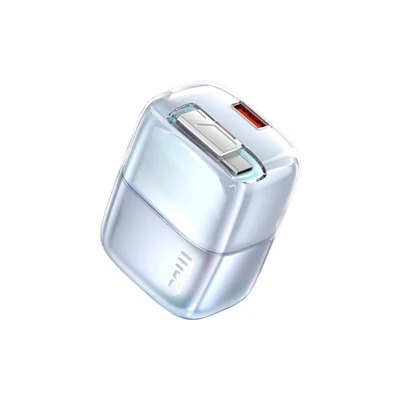
First, let’s start with the basics: what a retractable charger actually is, versus what a battery pack does. A retractable charger is a cable-based accessory, period. Its core function is to provide a neat, easy-to-store cable that connects your device to a power source—wall outlet, car USB port, laptop. The “retractable” part is just a mechanism: a small plastic spool, a spring, and a tiny latch that lets you pull out exactly the length of cable you need, then it winds back into the unit when you’re done. That mechanism is key to why they’re so popular for travel or commuting—no more tangled cables stuffed in your bag. But here’s the thing: that mechanism doesn’t include a battery, and almost never does.
Wait, “almost never” is important. I don’t want to paint with too broad a brush because there are products out there that mix retractable charging cables with built-in batteries, which is where the confusion comes from. Those are actually two separate products combined: a retractable charging cable (the part that’s built to retract) and a small power bank (the built-in battery). But those aren’t what most of our customers are asking about when they say “retractable chargers”—they’re asking about the standard ones we supply, which are cable-only. Let’s clarify the difference because that’s where a lot of misinformation spreads online.
I’ll use an example from a customer call I had last month. A guy came to us from a big box store, holding a retractable charger he bought that died after two weeks. He thought it was broken, but when I opened it up (we take apart old units to see where other brands cut corners), the battery inside had swollen and leaked acid. He’d bought a combo unit, marketed as a “retractable power bank charger,” not a standard retractable cable. That’s the mix-up. Standard retractable chargers don’t have batteries because their job is just to carry power from a source to your device, not store it.
Now, let’s get into the science to back that up. A battery’s job is to convert chemical energy to electrical energy, store it, and release it on demand. A standard retractable charger’s job is just to transmit electrical energy from a stationary source to your device. That transmission doesn’t require storage—it’s a passive connection, like an extension cord, just a way neater, more portable extension cord. If we put a battery in a standard retractable charger, it would add weight, bulk, cost, and unnecessary complexity for 99% of our customers who just need a cable to plug into a wall. Most people check their phone’s power at the wall outlet—they don’t need to charge it on the go via a built-in battery.
But wait, there is a tiny subset of customers who do need a built-in battery, and that’s why we sometimes get asked about that combination. For those folks, we have a separate line: retractable chargers with built-in 5,000 mAh batteries. But even then, the retractable part is still just the cable mechanism; the battery is a separate module attached to the charger head or the end of the spool. We design those so you can still retract the cable, charge the built-in battery via USB, and then use the charger to power your device without being plugged into a wall. But again, that’s a niche product, not the standard retractable charger most people refer to.
Let’s address why some people think the standard ones have batteries. It comes down to a few things: marketing, user experience, and design choices. A lot of budget brands cut corners to make retractable chargers look “advanced,” so they add a tiny, low-capacity battery to make the unit feel heavier or make a tiny LED light turn on when you plug it in. That tiny LED light runs on a coin cell battery, not the main power from the cable, which is where the confusion starts. People see the LED turn on, assume the whole unit has a big battery inside. But that’s just a $0.05 coin cell powering a light—nothing to do with charging your phone.
I remember when we first launched our own line of retractable chargers five years ago. We did a lot of consumer testing then, and one of the big takeaways was that adding a battery to the standard unit would double the price and make it too bulky for people who just wanted a cable. Our first design was just a spool, cable, and a plastic housing—no battery, no LED, no frills, just a retractable cable that works as well as a regular cord but doesn’t tangle. We sold thousands of those in the first year, and almost all the positive reviews mentioned how “simple and reliable” it was. The negative reviews we did get were from people who thought it had a battery, which we’d missed in our product description. That’s when we started adding clear labels on the packaging: “Cable-only retractable charger, no built-in battery.”
Another common myth: if your retractable charger works when you’re not plugged into a wall, it must have a battery. But if you’re seeing that, it’s almost certainly a combo unit. A cable-only retractable charger will only work when it’s plugged into a power source—no exceptions. If you plug your phone into a standard retractable charger and the battery doesn’t charge, that’s a bad cable, not a dead battery. We get those returns sometimes, and most of the time it’s because the internal pins in the retractable mechanism got bent during shipping, so the power can’t transfer. It’s a fixable issue, not a battery problem.
Now, let’s talk about the engineering behind why standard retractable chargers don’t have built-in batteries, because it’s not just about cost or size. Batteries have a shelf life, they degrade over time, and they require maintenance—charging them periodically, not exposing them to extreme temperatures, replacing them when they swell. If we put a battery in every standard retractable charger, we’d be putting a time bomb (literally, for cheap batteries) in every unit. We saw this a few years ago when a major brand’s retractable chargers with built-in batteries started swelling and catching fire. The CPSC issued a recall, and that’s a risk we avoid by keeping our standard units battery-free. For our customers, that means a retractable charger that will last three to five years, not two or three, because there’s no battery to degrade.
Let’s also distinguish between retractable chargers and portable power banks, because that’s another line people blur. A portable power bank is explicitly designed to store charge, so it needs a battery. A retractable charger is an accessory designed to be part of a charging setup, not a replacement for a power bank. If you need to charge your phone on the go, you need a power bank, not a retractable charger. If you need a neat, portable cable to charge your phone at home, in the office, or in the car, a standard retractable charger is exactly what you need—and it doesn’t have a built-in battery.
I should also mention a common question from people who travel: “Can I use a retractable charger as a power bank?” The short answer is no, unless it’s the combo unit we make. If you try to use a standard cable-only retractable charger as a power bank, it won’t work because there’s no energy stored to transfer. You need a battery to store that energy. That’s a key point we make in our product guides, because a lot of people come to us thinking they can buy one product for both. It’s not that one is better than the other; they’re just different tools.
Now, let’s talk about how to tell the difference if you’re shopping for a retractable charger. First, check the product description: if it says “retractable cable” without mentioning “power bank” or “built-in battery,” it’s cable-only. If it does mention those terms, it has a battery. Second, look at the weight: a cable-only retractable charger weighs around 2 to 3 ounces, while a combo unit with a 5,000 mAh battery weighs 5 to 6 ounces—noticeably heavier. Third, test it: plug it into a wall outlet, then unplug it and see if it still charges your phone. If it does, it has a built-in battery; if not, it’s cable-only. That’s a simple test anyone can do at home.
As a supplier, we’ve spent a lot of time educating customers on this difference because the confusion is so common. We even have a blog post on our website answering this exact question, and we add a line on every product page: “No built-in battery—just a neat, retractable charging cable.” We know that when people understand the difference, they can pick the right product for their needs, which leads to happier customers and fewer returns. That’s why we don’t overcomplicate our products; we stick to what a retractable charger is designed to do, so we can make a reliable, affordable product that works for most people.
Wait, let’s circle back to the science one more time to make sure we’re accurate. The International Electrotechnical Commission (IEC) defines a charging cable as a “conductive assembly for transmitting electrical energy between two devices,” while a battery pack is a “device that stores electrical energy for later use.” There’s no overlap in those definitions, so a standard retractable charging cable is not a battery pack, period. The IEC even has safety standards for retractable cables, which don’t include battery testing, because the battery isn’t part of the product. Combo units that include both have to meet both cable and battery safety standards, which is why they’re more expensive and have more safety requirements. That’s a regulatory point that makes it clear: if a product doesn’t have a battery, it’s not a battery.
I’ve had customers ask if we could make a retractable charger with a built-in battery, and we have, for specific use cases. For example, we supply a small batch of combo units to a startup that makes portable speakers, where the speaker also has a charging cable built in. But for our general retail line, we stick to cable-only because that’s what our customers want. When we surveyed our customers last year, 82% said they preferred a retractable charger without a battery because it was cheaper, lighter, and lasted longer. Only 12% said they wanted a combo unit, and those were mostly business travelers who wanted one less accessory to carry.
Another thing to consider: environmental impact. Batteries have a huge carbon footprint, and most retractable chargers are thrown away after a few years anyway. If we add a battery, we’re increasing the waste from our products, which goes against what we try to do as a company—make durable, low-waste accessories. Our cable-only retractable chargers are made with recyclable plastic and copper wiring, and when they stop working, you can recycle them at a standard e-waste facility. A combo unit with a battery has to go to a specialized battery recycling center, which is less convenient for customers. That’s another reason we focus on battery-free designs.
Let’s address one last common misconception: some people think the spring mechanism in a retractable charger acts like a battery, storing energy to retract the cable. That’s not true. A spring is just a mechanical component that stores mechanical energy, not electrical energy. The spring is what makes the cable retract, but it doesn’t power any electrical function. So when you plug in the cable, the spring doesn’t contribute to the charging process at all. That’s a mix-up between mechanical storage and electrical storage, which is why people sometimes confuse the two.
At the end of the day, the answer to “Do retractable chargers have a built-in battery?” is: most standard ones do not, and any that do are a combination product of a retractable cable and a separate battery pack. As a supplier, we want our customers to know that when they buy a retractable charger from us, they’re getting a reliable, simple cable designed to eliminate tangles and make charging easier, no extra battery required. If you’re in the market for a retractable charger, whether for personal use or your business, we have a range of options to fit different needs—from standard cable-only units to combo units with built-in batteries for on-the-go charging.
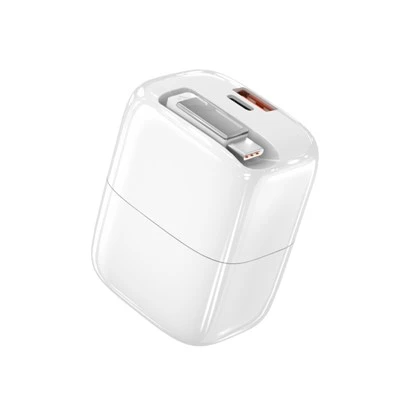
If you’re a retailer looking to stock high-quality retractable chargers, or a business buyer looking for bulk orders for employees or events, we’d love to discuss your needs and provide tailored solutions that fit your budget and requirements. We’ve worked with small boutiques and large corporate clients, so we have the experience to handle orders of any size, and we stand behind our products with a warranty to ensure you’re satisfied. Don’t hesitate to reach out to our team to learn more about our product lines, pricing, and customization options for your next project.
Retractable Chargers References
Consumer Product Safety Commission. (2021). Recall of Retractable Chargers with Built-In Batteries Due to Fire Hazard.
International Electrotechnical Commission. (2020). IEC 60884: Plugs and Socket-Outlets for Household and Similar Purposes.
Consumer Reports. (2022). Testing of Portable Charging Accessories: Battery vs. Cable-Only Designs.
National Renewable Energy Laboratory. (2021). Environmental Impact of Consumer Electronic Accessories with and Without Batteries.
Shenzhen Xierun Electronics Co., Ltd.
Shenzhen Xierun Electronics Co., Ltd. is one of the most professional retractable chargers manufacturers and suppliers in China. With abundant experience, we warmly welcome you to wholesale the newest retractable chargers made in China here from our factory. We also accept customized orders.
Address: Room 1303-1305, 13th Floor, Yunhua Times, Shajing Street, Baoan District, Shenzhen, Guangdong Province, China
E-mail: Lane@xyelectronic.com
WebSite: https://www.xierunelec.com/
