Hey there, I’m Jake, and for the last 8 years, I’ve been deep in the weeds with drive shafts—first as a tech in our shop, now as the guy who walks our customers through everything from sizing parts to fixing wonky alignment issues. If you’ve ever dealt with a drive shaft that vibrates like crazy at highway speeds, you already know the headache that comes with it. 9 times out of 10, that’s not a broken u-joint or a bent tube (though those suck too)—it’s out of phase. Phasing a drive shaft sounds like some fancy engineering jargon, but trust me, it’s simpler than it sounds, and skipping this step leads to way more trouble down the line. As a drive shaft supplier, we see so many customers rush this process to save time, and it always comes back to bite ’em. Let’s break it down like we’re talking shop in our warehouse after a long shift, no stuffy textbook terms. Drive Shaft
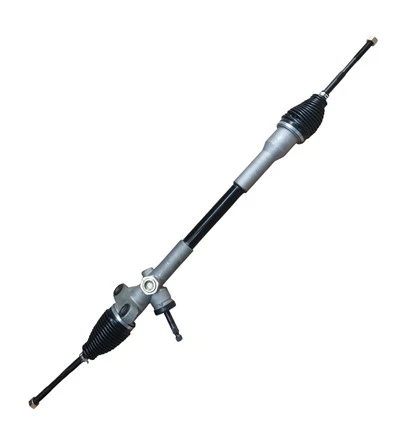
First off, let’s get on the same page about what phasing actually is, because I still hear people mix it up with balancing or aligning. Balancing is about making sure the shaft doesn’t wobble side to side as it spins—you add small weights to counter any heavy spots. Aligning is about making sure the transmission and rear end yokes are lined up dead straight when the truck’s on the ground. Phasing? That’s all about making sure the u-joints on each end of the drive shaft are “in sync” so they transfer power smoothly without that dreaded harmonic vibration. Drive shafts spin fast—like, 1,000+ RPM at 60 mph fast—so even a tiny misalignment in the u-joints will make them twist unevenly, which creates that vibration you feel in the steering wheel, floorboards, even the seat.
Here’s the thing: every drive shaft has two u-joints at least, right? (Some long ones have three, but same rule applies.) Each u-joint has a cross, caps, and bearings that let it move as the rear end pivots when you hit bumps. If you line up the u-joint yokes so the bearings are facing different directions on each end, when the shaft spins, one u-joint twists a little before the other, creating a constant pulsing motion. That vibration doesn’t just annoy you—it wears out u-joints, carrier bearings, even transmission mounts way faster than they should. We’ve had customers come back 3 months after installing a new shaft complaining of u-joint failure, and 90% of the time we pop it on the balancer and see the phase is off by 15 degrees or more. It’s such an easy fix, but so many people get it wrong.
Now, let’s get to the actual process. I’m gonna walk you through the basic steps for a standard two-piece truck drive shaft (super common for pickups and vans) because that’s what most of our customers deal with. No fancy tools needed, just a marker, a tape measure, and a partner to help hold things steady. If you’ve got a one-piece shaft, it’s almost identical, just fewer parts to juggle.
First step: prep and safety. This is non-negotiable, guys. You’re working under a truck, so jack it up on jack stands, not just a scissor jack—those things can slip and you don’t want a 6,000 lb truck on top of you. Put the truck in neutral, block the tires so it can’t roll, and wear work gloves and safety glasses. You don’t want a spinning shaft slapping you, or metal shavings in your eyes. Got that? Good.
Next, mark the parts. This is where the magic starts. You need to make reference marks on three things: the transmission yoke (that’s the part sticking out of the transmission where the front of the drive shaft connects), the front u-joint yoke (the part that bolts to the transmission yoke), and the rear u-joint yoke (the part that bolts to the rear end differential, where the back of the drive shaft connects). Most people skip marking the transmission yoke, and that’s their first mistake. If you just mark the drive shaft ends, you can’t tell if the problem is the shaft or the trans/diff alignment.
Grab a permanent marker (something that’ll stay put, not a Sharpie that rubs off on grease) and make a straight line all the way across the transmission yoke and the u-joint yoke that bolts to it. Do the exact same on the rear end differential yoke and the rear u-joint yoke. Make sure the lines are dead straight, not just a quick scribble. If you’re using a paint pen, even better—they show up way better on greasy parts. Once all four marks are lined up exactly on top of each other, that’s your reference for being in phase.
Now, disconnect the drive shaft. Loosen the bolts that hold the rear u-joint yoke to the differential yoke, then the bolts that hold the front u-joint yoke to the transmission yoke. Slide the shaft back out, and lay it on a workbench or the ground where you can see both ends. Here’s the check: when you pull the shaft out, hold it up so both u-joints are facing the same direction. If the bearing caps on one u-joint are pointing forward/back and the other are pointing left/right, that’s out of phase. You need the caps to be on the same plane, like matching arrows pointing the same way.
Wait, hold on—what if you’re replacing a u-joint? Oh, this is a super common scenario. If you’re swapping out a bad u-joint, a lot of people just yank the old one and pop the new one in without checking the phase. That’s a recipe for vibration. When you pull a u-joint, make a mark on the cross and the yoke before you pry it out. If the old u-joint was installed correctly, the marks will line up, but sometimes old parts get worn or shifted, so double-check anyway. If you don’t have marks, just make sure the caps are on the same plane when you put the new one in. For three-piece shafts (common for larger trucks or RVs), you’ve got a carrier bearing in the middle, so you have to mark both front and mid shaft ends, and mid and rear, to keep them all synced.
Now, if you’re putting a new drive shaft in (or re-installing a used one you took out), here’s the trick to phase it fast. Line up the front marks first: the transmission yoke mark and the front u-joint yoke mark. Tighten those bolts just enough to hold it, but not all the way—you might need to twist the shaft a little to line up the rear marks. Now the rear end: line up the differential yoke mark and the rear u-joint yoke mark. If they line up, great—tighten all the bolts. If not, that’s when you adjust. How much? If the marks are off by one bolt hole, that’s like 12-15 degrees, which is enough to cause vibration. That’s why we emphasize the reference marks—they take the guesswork out.
Wait, but what if I don’t have marks? Let’s say you bought a new shaft from a random supplier and there’s no marks, or you’re working on an old truck that’s missing them. Here’s a quick DIY way to check phase without fancy tools. Jack up the rear of the truck so both rear tires are off the ground. Put the truck in neutral, then grab the rear tire and spin it one full turn. Watch how many times the drive shaft spins. If it spins exactly one full turn, that’s good. If it spins one and a half, or half a turn, that’s out of phase. Wait, no—wait, let me correct that. The right way is: spin the rear tire until the front u-joint is at the 12 o’clock position. Then spin the rear tire until the rear u-joint is at 12 o’clock. If the rear tire spun exactly 180 degrees, that’s in phase. If it spun anything more or less, that’s off. That’s a rough check, but it works if you don’t have marks.
Now, as a drive shaft supplier, I gotta be real with you—sometimes phasing alone doesn’t fix vibration. You also need to make sure the shaft is balanced. At our shop, every shaft we ship goes through a dynamic balance check, because even perfect phase can have a heavy spot from welding or material inconsistency. If you’ve had a shaft phased and it’s still vibrating, that’s when you take it to a shop that has a balancer—we offer that service for our customers, too, because we know a lot of people don’t have the gear in their garage.
Let’s talk about common mistakes we see that mess up phasing. First, rushing the mark step. A lot of people just put a tiny dot instead of a straight line, so when they line them up, they’re off by a few degrees without noticing. Second, not tightening the bolts evenly. If one bolt is tighter than the other, the u-joint can twist slightly, throwing off the phase. Third, for long drive shafts, not accounting for the carrier bearing. The carrier bearing has to line up with the frame crossmember, so if you mount it wrong, it can pull the shaft out of phase. Fourth, when replacing a u-joint, mixing up the caps. Each u-joint is assembled with the caps pressed in to the yokes—if you swap a cap from one side to the other, the plane will be off. We package new u-joints with a little instruction sheet that shows how to line up the caps, but most people toss that.
Another thing: if you’re lifting your truck, like a suspension lift, that changes the angles of the drive shaft, which can throw off phase. A lot of guys do a lift and then install a cheap aftermarket shaft that doesn’t account for the new angles, leading to vibration. That’s why as a supplier, we make custom shafts for lifted trucks, not one-size-fits-all. Custom means we design the length, u-joint angles, and phase specifically for your truck’s lift, so you don’t have to deal with fixing it later.
Wait, let’s test this with a real example. Last month, we had a customer bring in a 2018 Ford F-150 that had vibration at 50-60 mph. He’d replaced the u-joints himself, but the vibration was still there. We pulled the shaft, checked the phase, and it was off by 22 degrees. Turns out when he replaced the front u-joint, he’d pressed the caps in backwards, so the plane was flipped. We re-phased it, balanced it, and sent it back. He texted us a week later saying the vibration was gone, and he was sorry he didn’t call us first to walk him through it. That’s exactly why we’re here—we don’t just sell parts, we help you do it right.
Now, let’s wrap this up with a quick recap, so you don’t forget. Phasing a drive shaft is syncing the u-joint planes on each end to eliminate vibration. Mark your reference points on trans yoke, diff yoke, and both u-joint yokes first. Disconnect, adjust the shaft so marks line up, tighten bolts evenly, double-check. If you don’t have marks, spin the rear tire to check u-joint positions. Don’t skip balancing, and if you’re working on a modified truck, go with a custom shaft from a supplier that knows what they’re doing.
If you’re in the middle of a shaft project, stuck on the phase, or just need a new shaft that fits right, hit us up. We can walk you through the process over the phone, or if you need a custom made to your specs, we can get you a quote fast. No gimmicks, no hidden fees, just solid advice and parts that actually work.
Before I go, let’s make sure I didn’t miss anything. Oh, one big one: never beat on u-joints with a hammer. Use a u-joint press, or at least a socket that fits the cap to tap it out evenly. Hitting it with a hammer can bend the cross or crack the yoke, which will throw off phase anyway. We’ve seen more than one customer come in with a broken yoke because they used a claw hammer to yank out a u-joint.
Another note: for four-wheel drive trucks, the front drive shaft is phased the same way. The only difference is it connects to the transfer case instead of the transmission, and it’s spinning faster, so phase is even more important. We see a lot of vibration in 4x4s that’s from a front shaft out of phase, especially after off-roading when the shaft gets twisted.

At the end of the day, phasing is all about paying attention to small details that save you big headaches later. As your drive shaft supplier, we’ve got your back—whether you need advice, parts, or custom builds, we’re here to make sure your ride is smooth, not vibrating like a massage chair gone wrong. If you’re ready to sort your shaft or get a new one, reach out and we can chat through your needs.
Drive Shaft References:
- Drive Shaft Principles and Practice. Automotive Service Association, 2021.
- Universal Joint and Drive Shaft Service Manual. National Institute for Automotive Service Excellence (ASE), 2022.
- Custom Driveline Design and Installation Guide. Automotive Manufacturing Association, 2023.
Guangzhou Pinxiu Auto Parts Co., Ltd.
As one of the most professional drive shaft manufacturers and suppliers in China, we warmly welcome you to buy durable drive shaft for sale here from our factory. All customized products are with high quality and competitive price. Contact us for pricelist.
Address:
E-mail: pinxiu@cclparts.com
WebSite: https://www.cclauto-parts.com/
