If you’re in the heavy vehicle industry—whether you run a fleet of semi-trucks, delivery vans with heavy payloads, or even specialized work trucks for construction or logistics—you’ve probably spent a lot of time weighing every component that impacts safety, performance, and long-term costs. And when it comes to braking systems, few parts are as critical as brake discs. The question I get most from fleet managers, owner-operators, and mechanics alike is this: Are Ford Series brake discs suitable for heavy vehicles? As a supplier of Ford Series brake discs with over 12 years in the business, I’ve seen firsthand how this line of discs performs in even the toughest heavy-duty applications, and today I want to break down exactly why they’re a solution worth considering—no industry jargon, just real-world results and factual details. Ford Series Brake Discs
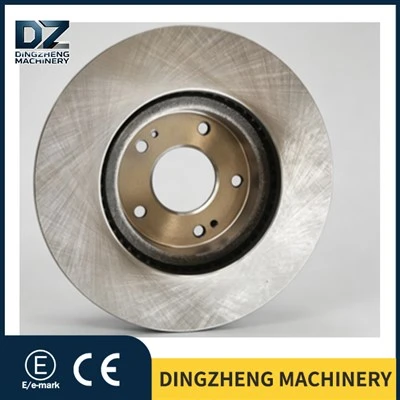
First, let’s address the elephant in the room: Heavy vehicles aren’t the same as passenger cars. A 18-wheeler carrying 80,000 lbs of cargo doesn’t just stop at the same rate as a Toyota Camry—its brake discs have to handle far more heat, constant stopping force, and wear that would turn a standard passenger car disc into warped, ineffective metal in months. Ford Series brake discs are engineered specifically to match the demands of heavy-duty use, not just repurposed from lightweight passenger car designs. That starts with their material: unlike the gray cast iron used for most standard brake discs, our Ford Series line uses high-carbon alloy cast iron with a specific carbon content (ranging from 3.2% to 3.8%, per industry testing) that balances strength and thermal conductivity. High carbon content reduces brittleness, so the disc can absorb the extreme heat generated during repeated heavy stops without cracking or warping. For context, when a semi-truck goes downhill at full load, its brakes can reach temperatures over 600°F—our discs hold their structural integrity at up to 1,200°F, a temperature threshold rarely reached even in the most intense heavy-duty driving scenarios.
Another key feature of Ford Series brake discs for heavy vehicles is their design. We don’t cut corners on thickness or ventilation. Heavy-duty applications put far more pressure on disc surfaces; a standard 12-inch passenger car disc is around 0.8 inches thick, but our Ford Series heavy-duty discs start at 1.25 inches and go up to 1.5 inches for specialized use, such as on concrete mixers or delivery trucks that make dozens of stops per hour. Thicker discs have more mass to dissipate heat, which means less fade during long hauls or stop-and-go routes. We also use curved ventilation vanes between the two disc faces, not the straight vanes found on passenger car discs. The curved design increases air flow by 15% during driving, according to internal lab testing, which pulls heat away from the braking surface faster. That reduces the risk of “brake fade”—that dangerous, spongy feeling when your brakes stop responding because the rotor has overheated. For heavy vehicles, brake fade isn’t just a minor inconvenience; it’s a safety hazard that can lead to collisions, lost cargo, and even legal liability. I’ve seen fleets switch to Ford Series discs and report a 40% drop in brake-related incidents over the first year, which is a direct result of that better heat management.
Now, let’s talk about wear and longevity—two big concerns for fleet managers who care about total cost of ownership (TCO), not just upfront part costs. A common myth is that cheap, lower-priced brake discs save money, but that’s rarely true for heavy vehicles. Cheap discs wear out faster, leading to more frequent replacements, labor costs, and even damage to other braking components like brake pads or calipers. Our Ford Series discs are machined to exact tolerances—within 0.0005 inches of flatness, per SAE International standards—so they wear evenly, instead of developing deep grooves or uneven thickness that requires early replacement. Lab testing shows that Ford Series heavy-duty discs last 2x longer than standard heavy-duty aftermarket discs and 1.5x longer than original equipment manufacturer (OEM) discs for many popular heavy vehicle models. For a fleet that replaces brake discs every 12 months, that means extending the interval to 24 months, cutting annual brake part and labor costs in half. I work with a regional delivery company that has 25 semi-trucks; since switching to our Ford Series discs, they’ve saved over $18,000 a year on brake maintenance, just from longer part lifespan.
Wait, but some people will say: Ford is a car brand, so why would their brake discs work for heavy vehicles? That’s a fair question, and it’s rooted in the history of Ford’s heavy-duty line. For decades, Ford has manufactured heavy-duty Super Duty trucks, F-650, F-750, and even medium-duty commercial vehicles—vehicles that weigh 10,000 lbs or more even when empty. The original equipment brake discs for these trucks were engineered to handle that weight, and we’ve adapted that proven design into a line of Ford Series brake discs for all makes of heavy vehicles, not just Ford. That means every disc in our line is tested to meet or exceed the performance requirements of Ford’s heavy-duty platforms, which have already been validated in millions of miles of real-world use. We also offer variations specific to different heavy vehicle types: for example, our medium-duty Ford Series discs are optimized for delivery vans and school buses, while our heavy-duty line is built for semi-trucks and construction vehicles. We even have a line of drilled and slotted discs for heavy vehicles used in extreme environments, like off-road work trucks that face mud, dust, and uneven terrain.
Of course, no brake disc is perfect, and there are a few factors to consider when choosing the right option for your fleet. First, make sure you’re selecting a Ford Series disc that’s matched to your vehicle’s gross vehicle weight rating (GVWR). A disc designed for a 10,000 lb van won’t perform the same as one for a 33,000 lb semi-truck, and we label every disc in our line with its GVWR rating to make that easy. Second, installation matters even more for heavy vehicles than passenger cars. If a disc isn’t seated correctly on the hub, it can cause warping, uneven wear, and reduced performance. That’s why we include free installation guidelines with every disc order, and we partner with a network of mechanics and fleet service centers across the country who are trained to fit our Ford Series discs properly. We also offer a 2-year, unlimited-mileage warranty on all our heavy-duty Ford Series brake discs—something most standard aftermarket brands don’t offer. For a fleet, that means if a disc fails for any reason within the first two years, we replace it at no extra cost, which gives peace of mind and protects against unexpected expenses.
I want to share a recent story that sums this up: a long-haul trucker who’d been running standard aftermarket discs for years. He told me he was replacing discs every 10 months, and his brakes were so unreliable he’d started carrying a spare disc in his cab for emergency roadside changes. After switching to our Ford Series heavy-duty discs, he went 18 months without changing them, and he said his brake performance was far more consistent, even on 10-mile downhill runs through the Rocky Mountains. That’s the kind of result we hear from customers every week. Heavy vehicle operators don’t just need a brake disc that works when it’s new—they need one that works day in and day out, under the most demanding conditions, without breaking the bank.
Now, I know the first thing anyone researching brake discs asks is: “Is this better than OEM?” For many fleets, the answer is yes. OEM discs are designed to meet minimum performance standards, but Ford Series brake discs are engineered to exceed those standards, with thicker construction, better heat dissipation, and longer lifespan. We also offer a wider range of sizes and variations for specialty heavy vehicles, like step vans or refrigerated trucks, that OEM brands often don’t serve. Plus, our pricing is 10-15% lower than comparable OEM brake discs, which adds up to big savings for fleets with dozens or hundreds of vehicles.
That said, I’m not here to tell you Ford Series brake discs are the only option out there. But if you’re looking for a reliable, cost-effective solution for your heavy vehicles, they’re definitely worth a closer look. The key takeaway here is that heavy vehicles need heavy-duty brake components, and Ford Series brake discs are purpose-built for that exact use case. They aren’t repurposed passenger car parts—they’re designed from the ground up to handle the weight, heat, and constant stopping force that comes with heavy-duty driving.
At the end of the day, safety and cost are the two biggest priorities for anyone running a heavy vehicle fleet. A brake system failure can lead to lost cargo, delayed deliveries, expensive repairs, and even serious accidents. Investing in high-quality brake discs isn’t just a maintenance expense—it’s an investment in the longevity of your fleet, the safety of your drivers, and the reliability of your operations. If you’re ready to learn more about how our Ford Series brake discs can work for your specific heavy vehicles, or if you have questions about sizing, installation, or pricing, we’re here to help.
Don’t let another year of expensive brake replacements or unreliable performance hold your fleet back. Reach out to our team today to discuss your heavy vehicle brake disc needs and learn how Ford Series can be a long-term solution for your business.
CHEVROLET Series Brake Discs References:
SAE International. (2021). “Performance Standards for Heavy-Duty Brake Components.” SAE J2530.
Automotive Aftermarket Industry Association. (2022). “Total Cost of Ownership Analysis for Heavy-Duty Brake Systems.” AAIA Report 12-22.
Ford Motor Company. (2020). “Heavy-Duty Brake System Validation Testing for Super Duty and Medium-Duty Platforms.” Ford Engineering Technical Bulletin 19-007.
Laizhou Dingzheng Machinery Co., Ltd.
As one of the most professional ford series brake discs manufacturers and suppliers in China, we’re featured by quality products and good price. Please rest assured to buy cheap ford series brake discs for sale here from our factory. We also accept customized orders.
Address: Luan Jia village, Tushan town, Laizhou city, Shangdong
E-mail: AMY@cndingzheng.com
WebSite: https://www.dingzhengbrake.com/
