As a Weichai Piston supplier with years of hands-on experience working with engine technicians and fleet operators, I’ve seen firsthand how small, precise adjustments to engine parameters can unlock the full potential of Weichai pistons—while also extending their service life. Many engine owners and maintenance teams make the mistake of treating piston-related issues as isolated problems, but the reality is that pistons are deeply integrated with fuel injection timing, air-fuel ratio, and cooling system performance. Getting these parameters right isn’t just a technical detail; it’s the difference between a piston that lasts 80,000 miles and one that fails prematurely in 30,000 miles. Weichai Piston

First, let’s start with a foundational point: Weichai pistons are engineered for specific engine models, from heavy-duty truck engines to industrial power units. Each piston has a designated compression ratio, ring groove tolerance, and heat dissipation capacity that’s calibrated by Weichai’s R&D team. That means any parameter adjustment you make has to align with those factory specifications—you can’t simply tweak values to match a “one-size-fits-all” approach. When I work with clients, I always emphasize that adjusting engine parameters for Weichai pistons isn’t about modifying the piston itself; it’s about optimizing the engine’s operating conditions to support the piston’s design.
Let’s dive into the most critical parameter: fuel injection timing. For Weichai pistons, improper timing is the top cause of premature wear, cracked crowns, or even piston seizure. Here’s why: If fuel is injected too early, the combustion event happens before the piston reaches top dead center (TDC). That creates an uneven, harsh pressure spike that hits the piston crown like a hammer—especially on aluminum Weichai pistons, which are lighter but more sensitive to sudden force. If injection is too late, combustion continues well after the piston starts moving downward, leaving unburned fuel that coats the piston rings and reduces oil film stability.
How do you adjust this correctly for Weichai pistons? First, pull the original equipment manufacturer (OEM) timing specs from the Weichai service manual for your specific piston model. For example, Weichai’s WP12 series pistons call for a base injection timing of 12 degrees before TDC at idle, but this can shift by ±1 degree depending on fuel grade and ambient temperature. I recommend using a timing light that’s calibrated for heavy-duty diesel engines, not a generic one—generic lights can’t accurately detect the small, precise timing marks on modern Weichai fuel systems. When adjusting, make small, incremental changes: shift timing by 0.5 degrees at a time, run the engine under a light load (1,500 RPM, 50% of max torque) for 10 minutes, and check exhaust gas temperature (EGT) at the manifold. For Weichai pistons, EGT should stay between 550°C and 650°C at that load. If EGT climbs above 650°C, your timing is too late; if it’s below 550°C, timing is likely too early.
Next, the air-fuel ratio (AFR). This is another make-or-break parameter for Weichai pistons. AFR is the ratio of air to fuel in the combustion chamber, and Weichai pistons are designed to run with a stoichiometric ratio (ideal for complete combustion) of 14.7:1 for gasoline applications, and 18:1 for diesel engines. Wait—diesel engines run lean, right? Yes, but that lean mix has to be balanced, especially for Weichai pistons which have optimized ring gaps to control oil consumption. If the AFR is too lean (too much air), the combustion chamber runs hotter than designed. Weichai pistons have a thin thermal barrier coating on the crown, but prolonged exposure to temperatures above 700°C will cause that coating to peel, leaving the aluminum piston exposed to direct heat. This leads to piston crown warping and ring sticking.
If AFR is too rich (too much fuel), unburned fuel washes down the cylinder walls, diluting the engine oil. For Weichai pistons, which rely on the oil film between the piston rings and cylinder liner for lubrication, diluted oil can cause scuffing on the piston skirt. How do you adjust AFR correctly? For electronic fuel injection (EFI) systems, use a OEM-grade scanner that can access the Weichai engine control unit (ECU) — third-party scanners often default to generic settings that don’t account for Weichai’s piston design. On older mechanical injection systems, you’ll adjust the fuel rack stop screw in small increments. For every 10 RPM increase in idle speed, adjust the screw a quarter turn, and monitor exhaust smoke: light gray smoke is normal, thick black smoke means AFR is too rich, and white smoke means it’s too lean.
Then, there’s the cooling system parameters—often overlooked, but critical for Weichai piston performance. Weichai pistons rely on the engine’s cooling system to dissipate heat from the piston pin and ring grooves. If cooling is insufficient, heat builds up in the piston, causing the aluminum alloy to expand beyond its designed tolerance. This can lead to piston pin seizure or rings getting stuck in their grooves. When adjusting cooling-related parameters, don’t just look at coolant temperature (CT) — check the coolant flow rate, which is tied to thermostat opening temperature and water pump pressure. Weichai recommends a thermostat that opens at 82°C, and a water pump pressure of 1.5 bar at operating temperature. If your thermostat opens too early, coolant flows too quickly, reducing heat retention in the combustion chamber and leading to incomplete fuel burn. If it opens too late, CT climbs above 90°C, which is the threshold where Weichai piston alloy starts to degrade.
A common mistake I see with fleet operators is adjusting the coolant pressure to fix overheating, but that doesn’t address the root cause. For Weichai pistons, I always suggest flushing the cooling system every 10,000 miles and testing the coolant’s ethylene glycol concentration—it should be between 40% and 60%. Too much glycol reduces heat transfer, and too little leaves the piston unprotected from corrosion.
Now, let’s talk about load-related adjustments. Weichai pistons are built for heavy loads, but operating the engine at 100% load for extended periods without adjustment will wear the piston faster. When the engine is under high load, the combustion pressure spikes, and the piston experiences more side thrust against the cylinder liner. To compensate, adjust the turbocharger boost pressure (for diesel engines) to stay within Weichai’s specs—usually 1.2 bar at full load for WP series engines. If boost pressure is too high, the extra pressure pushes the piston’s skirt against the liner, causing uneven wear. If it’s too low, the engine doesn’t generate enough power, leading to unburned fuel that coats the piston rings.
I once worked with a long-haul trucking company that reported Weichai piston failures every 25,000 miles, which was half the expected service life. After inspecting their engines, we found their boost pressure was set 0.3 bar higher than Weichai’s recommendation, because they thought more power meant better performance. After adjusting boost pressure back to OEM specs, their piston service life jumped to 75,000 miles, saving them over $12,000 in annual replacement costs.
Another key parameter is piston ring tension. Wait—ring tension is part of the piston itself, but the way you adjust engine parameters affects how that tension performs. For Weichai’s compression rings, the designed tension is 15 N, and oil control rings are 10 N. If you adjust the AFR to be too rich, the rings can get gummed up with unburned fuel, reducing their tension and allowing oil to leak into the combustion chamber. This leads to blue exhaust smoke and increased oil consumption. To fix this, adjust the AFR back to specs, and add a high-quality fuel injector cleaner that’s approved for Weichai engines—generic cleaners can damage the piston’s coating.
When making any parameter adjustment, always take baseline readings first. Before touching anything, record the current injection timing, AFR, EGT, CT, and boost pressure. This gives you a reference to compare after adjustments, so you can tell if a change is positive or negative. For example, if you adjust timing and EGT goes from 580°C to 620°C, that’s a good change; if it goes to 680°C, you’ve gone too far and need to revert.
It’s also important to consider the age of your engine and piston. If you’re installing a new Weichai piston, the break-in period (the first 500 miles) requires extra care. During break-in, adjust the load limit to 50% of max RPM, and keep EGT below 600°C. This allows the piston rings to seat properly against the cylinder liner, which prevents scuffing and ensures long-term performance. I’ve seen technicians skip the break-in adjustment, leading to new pistons failing in less than 1,000 miles—all because they didn’t adjust the engine parameters during this critical period.
Now, let’s cover some common issues that come from improper parameter adjustments, and how to fix them. If you notice piston crown cracking, check injection timing and EGT—this is almost always from too early timing. If you see ring sticking, check AFR and cooling system temperature. If there’s piston skirt scuffing, the air-fuel ratio is likely too rich, diluting the oil film. In all these cases, the fix is to adjust the parameters back to Weichai’s OEM specs, rather than replacing the piston.
As a Weichai Piston supplier, my goal isn’t just to sell you a high-quality piston—it’s to help you make that piston last as long as possible. Adjusting engine parameters correctly isn’t hard, but it requires attention to detail and adherence to Weichai’s engineering guidelines. Every adjustment should be incremental, based on real-time readings, and tied to the specific piston model you’re using.
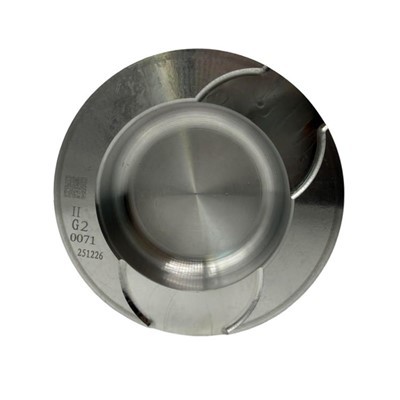
If you’re experiencing premature piston wear, performance issues, or you’re installing new Weichai pistons and need guidance on parameter adjustments, don’t hesitate to connect with our team for a consultation. We work with engine technicians, fleet managers, and repair shops to provide tailored advice that aligns with Weichai’s standards, helping you get the most out of your equipment.
YUNNEI Piston References
Weichai Power. (2022). Service Manual for WP Series Heavy-Duty Engines. Weichai Group.
Society of Automotive Engineers. (2021). Diesel Engine Piston Design and Parameter Optimization. SAE International.
Internal Combustion Engine Research Institute. (2020). Effects of Fuel Injection Timing on Piston Thermal Stress. Tsinghua University Press.
Hebei Yuwei Piston Co., Ltd.
As one of the most professional weichai piston manufacturers and suppliers in China, we’re featured by quality products and good service. Please rest assured to buy customized weichai piston made in China here from our factory. Also, quotation is available.
Address: Beizhujiacun Village, Sujiuzhuang Town, Ningjin County, Xingtai City, Hebei Province
E-mail: jack@ywpiston.com
WebSite: https://www.ywpiston.com/
