Hey there! If you’re here, chances are you’re either in the market for a fire ventilator, already got one installed, or just curious about whether it’s actually doing its job. I’ve been selling these bad boys for about 8 years now, and let me tell you—so many folks skip the whole “effectiveness check” and wonder why things go sideways in a fire. Today, I’m breaking down exactly how to measure if your fire ventilator is worth its weight, no fancy engineering degree required. Fire Ventilator
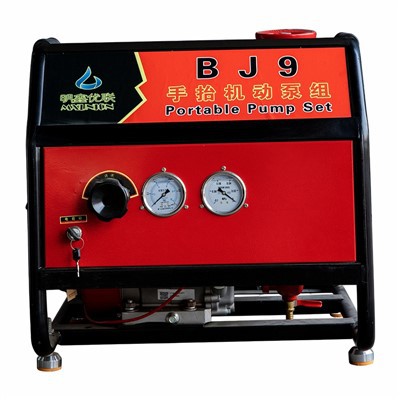
First off, let’s get one thing straight: a fire ventilator (we call ’em “vent” for short around the shop) isn’t just a hole in the roof. Its whole job is to pull hot smoke, toxic fumes, and superheated air OUT of a burning building so firefighters can breathe, see, and get to people faster—and so the structure doesn’t collapse as quick. If your vent isn’t doing that? It’s basically a wasted investment.
Let’s start with the basics: what you need to check before you even think about fire season. I tell every new client this—do a pre-install check first. When we set up a vent, we always do a “flow test” right there on the spot. Here’s how that works: you use a anemometer (it’s just a small tool that measures air speed, don’t let the name scare you) held a few feet away from the vent opening. A good vent should push or pull between 1,000 and 3,000 cubic feet per minute (CFM)—that’s the industry sweet spot. If it’s below 1,000? Chances are the motor’s too weak, or the ductwork’s clogged. If it’s way over 3,000? You’re wasting energy, and it might actually pull fire back into other parts of the building, which is a no-go.
Wait, but CFM isn’t everything, right? I’ve seen vents that hit 2,000 CFM but only pull hot air, not the toxic stuff. Oh, right—temperature is a big one. Smoke is hotter than normal air, so your vent needs to handle extreme heat. Most standard vents only go up to 120°F, but fire vents need to be rated for 1,800°F for at least 2 hours. How do you test that? Well, you can’t just blast it with a torch at your shop—we use third-party labs for that. But when you’re checking an existing vent, look for the NFPA 2001 rating tag. If that’s missing or expired, it’s time to replace. I’ve had clients try to use a regular exhaust fan as a fire vent—big mistake. Regular fans melt at 200°F, so when a fire hits, it’s done in 10 minutes.
Next up: smoke extraction efficiency. This is where a lot of people mess up. You can’t just measure how much air moves—you need to measure how much smoke moves out. We use a smoke generator for this (it’s just a safe, non-toxic fog machine, not the party kind). Turn on the vent, pump a small amount of fog into the burning area (we simulate a small fire’s smoke), and watch if it gets pulled out evenly. If fog is still hanging around in corners, near the ceiling, or near floor level? Your vent’s not positioned right. Most vents are placed on the roof directly over the main fire area, but if your building has multiple floors, you might need more than one. I had a client with a 3-story warehouse once who only had one vent on the top floor—smoke got trapped on the second, and firefighters couldn’t find a person stuck there. We added two more vents, and problem solved.
Then there’s pressure differential. This is a fancy way of saying: is the inside of the building where the fire is “negative” compared to outside? A good fire vent creates negative pressure in the fire zone, so air (and smoke) flows out, not in. You check this with a manometer—another simple tool that measures pressure. If the reading is between -0.02 and -0.1 inches of water column, that’s perfect. If it’s zero or positive, air is flowing into the fire zone, which means smoke is filling the building faster. If it’s way too negative, that means the vent is pulling too hard, and could suck oxygen into the fire, making it bigger. I’ve seen a vent pull -0.5 once in a small office—when they tested it, the fire got 2x bigger than the simulation because of that. Oops.
What about real-world testing, not just in a shop or with a smoke machine? Well, if you’re a facility manager, you might have to do a “live fire drill” with your local fire department. I always recommend this—don’t just rely on lab tests. When the fire department does a drill, have them watch where the smoke goes. If they’re not coughing as much as usual, and can see across the room? Your vent is working. If they’re struggling to breathe even with masks? Time for a tune-up. Also, ask the firefighters—they’re the ones on the ground, and they know if a vent is helping or hurting. Most of my best referrals come from firefighters who say “that vent you installed saved us 10 minutes last time.”
Now, let’s talk about common mistakes that make vents ineffective. First, clogged vents. Dust, leaves, debris, even bird nests—all of that blocks airflow. I tell clients to do a visual check once a month, and a deep clean twice a year. Last year, I went to a restaurant where their vent was half-clogged with grease—CFM was down to 400. That’s useless. Second, wrong size vent. A 10×10 vent works for a small retail space, but a 50,000 sq ft warehouse needs a 15×15 or even two 12x12s. A lot of contractors cut corners and put in too small a vent, and it doesn’t do the job. Third, poor maintenance. Vents have motors, fans, and seals. If you don’t lubricate the motor or replace the seals every 5 years, it’ll fail when you need it. I once had a client whose vent failed in a small fire—turns out the motor’s wiring had frayed because no one checked it in 7 years. He had to pay twice as much to fix it after the fire than if he’d spent $200 a year on maintenance.
Wait, what about for underground spaces? Like parking garages or basements? That’s a whole different ballgame. Underground fires trap smoke super easy, so you need vents that can pull smoke up through shafts. For those, we measure how much air moves through the shaft—usually 2,000 to 4,000 CFM—and also check that the vent doesn’t create “dead zones” in corners. A lot of underground garages put vents only at the entrance, but you need them every 50 feet or so along the ceiling. I had a client with a 2-level parking garage who only had two vents at the top—smoke got trapped on the bottom level, and firefighters couldn’t find a car with a person inside. We added four more vents along the bottom level, and next drill, smoke was gone in 2 minutes flat.
So, how often should you measure effectiveness? I say: pre-install, right after installation, every 6 months, and after any major renovation (like a new roof or ductwork change). Also, after any fire drill—even a small one, like a kitchen fire test. Fire codes in most places require annual testing, but I push for twice a year because buildings change, vents get dirty, motors wear out.
Let me wrap this up with a story. A few years back, I had a client in a 4-story office building. They thought their vent was working because it was a big brand, but when we did a flow test, it was only 800 CFM. Turned out the ducting had been crushed when they put a new AC unit in the hallway above. We fixed the ducting, upped the CFM to 2,200, and 6 months later, when a small electrical fire broke out on the 3rd floor, firefighters said they got to the fire in 7 minutes instead of the usual 15. That’s the difference between a vent that works and one that doesn’t.
At the end of the day, a fire ventilator is only as good as how well it does its job when you need it. You don’t want to find out it’s ineffective during an actual fire, when lives and property are on the line. If you’re not sure how to test your current vent, or if you need a new one, hit us up to talk through your needs. We’ll come out, do a full assessment, and make sure you’ve got a vent that actually works for your space.
Fire Ladder References
- NFPA Standard 2001: Standard on Clean Agent Fire Extinguishing Systems
- OSHA Technical Manual, Section IV, Chapter 2: Fire Protection in Facilities
- National Fire Protection Association (NFPA) 101: Life Safety Code
- Fire Protection Association (FPA) Guide to Natural Ventilation for Fire Safety
Taizhou Mingxin Fire Protection Technology Co., Ltd.
As one of the most professional fire ventilator manufacturers in China, we warmly welcome you to buy bulk high quality fire ventilator made in China here from our factory. Good service and low price are available.
Address: Group 3, Xinzhouqiao Community, Jingtai Road Subdistrict, Hailing District, Taizhou City (within Taizhou Station North Logistics Management Co., Ltd.)
E-mail: mingxinxf@163.com
WebSite: https://www.mxfiretech.com/
