Hey everyone, Steel Workshop
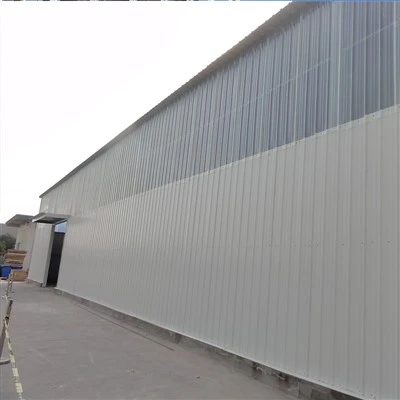
I’ve been running a steel workshop for over a decade now, and let me tell you—product design is where this whole industry stands or falls. Not just making stuff that’s strong enough, but stuff that actually solves problems for the folks using it, works within real-world shop floors, and doesn’t waste half the material sitting around your yard. Lately, I’ve had so many other workshop owners and construction guys hit me up saying their current steel bits are falling short: clunky frames that don’t line up, parts that rust too fast, designs that take way too long to put together. So I figured I’d pull back the curtain on what we’ve been doing to level up our product design, and maybe give some actionable wins to anyone else in the steel game.
First off—stop designing in a silo. When I first started out, my design team would huddle in a back office, draft up blueprints, and send ‘em straight to the floor without asking anyone who actually builds or installs the stuff. Big mistake. Last year, we fixed that. Now, every new design project starts with a 20-minute huddle: our fabrication guys, our lead fitters, even a couple of new hires who don’t have “that’s how we’ve always done it” stuck in their heads. For our heavy-duty storage rack line, the original design had these thick steel brackets that were a pain to drill. Our lead fitter, Mike, pointed out we could use a slightly thinner gauge steel but add a reinforcing rib at the stress point—something the designers never would’ve noticed because they don’t spend 10 hours a day tightening bolts on those things. That small tweak cut fabrication time by 18% and made the brackets way easier to install. Shortening that feedback loop isn’t just a “nice to have”—it means your design doesn’t look great on paper and suck in real life.
Next up: get hyper-specific about the end user. I don’t mean just “it’s for a construction site”—I mean, is it a construction site in Florida where it’s 95 degrees and humid 8 months a year? Or a shop in Minnesota where winter hits -20? Our original shipping container modification kits were a one-size-fits-all, and they were garbage for the Minnesota guys. The door hinges would seize up in the cold. So we started asking every customer who orders a custom kit a 3-question survey: what’s the average temperature where this’ll live? Is it for outdoor or indoor use? Will it be moved often? For the Minnesota guys, we swapped standard hinges for zinc-plated ones that handle cold better, added a little grease fitting every 6 months, and adjusted the frame so there’s no frozen moisture building up. Sales for that line jumped 22% in 6 months—because we stopped guessing what people needed.
Then there’s material science 101 that a lot of guys skip. Just because steel is steel doesn’t mean all grades are the same. I see so many workshops grab the cheapest steel on the block for structural stuff, and it ends up costing them way more in the long run. For our exterior guardrails, we used to use plain carbon steel because it’s cheap—until a customer in Detroit told us it rusted through in 2 years, even with a coat of paint. We switched to A36 steel with a hot-dip galvanized coating, and suddenly that guardrail is lasting 7+ years. But here’s the thing: you don’t have to go full premium for everything. For indoor shelving that never gets wet, 16-gauge mild steel works fine—thicker is a waste of material, which is a waste of money. We started mapping every part’s load requirement, location, and exposure, then matched it to the exact steel grade. That cut our material waste by 12% last year, because we weren’t using 18-gauge for a part that only needed 20-gauge. It’s not about buying the best steel—it’s about using the right steel.
Prototyping isn’t a luxury—it’s your cheapest test. For our new portable workbench, we went through 5 prototypes before we got it right. The first one was way too heavy—like, 110 lbs heavy, good for a garage but not for job sites where guys have to haul it up stairs. We cut 10 lbs by hollowing out the support beams, but then it bent under 500 lbs. Next prototype, we added a cross brace that wasn’t visible from the top, so the work surface stayed flat but the bench was still light. We even tested it on our own guys first—had them haul it around the yard, drop it from a foot high, set a 500 lb steel plate on it. That way, by the time we sent it to customers, we fixed all the kinks before anyone had to call us complaining. A lot of workshops skip prototyping to save time, but trust me—fixing a flaw on a prototype costs 1/10th what fixing it on a batch of 100 parts costs.
Lean into digital tools, but don’t forget the hands-on stuff. I know, I know—CAD is everywhere now, and for good reason. We use SolidWorks to run stress tests on designs before we even cut any steel. If a bracket is going to hold 1000 lbs, we can simulate that on the computer in 2 minutes, no need to build it. But here’s the catch: don’t rely solely on the computer simulation. Last month, our CAD team ran a test on a new roof truss and said it was fine—until our lead welder, Jake, noticed the angle of the welds didn’t line up with real-world fabrication. The computer didn’t account for human error when cutting the beams, so we adjusted the angle slightly to make welding faster and more consistent. Digital tools make design faster, but they’re only as good as the people using them.
Also, don’t sleep on post-use feedback. We send a quick email to every customer 6 months after they get our products, asking two questions: what’s working, and what’s not. Last quarter, a guy who bought our custom steel doors said the hinges were fine, but the lock was cheap and hard to open with gloves on. We swapped the lock for a heavy-duty, oversized padlock that works with work gloves, and within a month, three other customers asked for it. That’s free design feedback—no focus groups, no fancy surveys, just actual people using your stuff and telling you what they want.
Wait, and let’s talk about accessibility? Yeah, even in a steel workshop. A lot of our newer employees are younger, with bad knees or shoulder issues from 10 years of lifting heavy parts. We updated our design for our loading dock steel ramps to have wider handrails at a height that’s comfortable for shorter guys too, and even added a non-slip surface that doesn’t get super hot in the summer. That small change not only made our team happier to come to work, but we started getting requests from other workshops for ramps like that. Designing for the people making and using your product isn’t a “corporate responsibility” buzzword—it’s good business.
I’ve seen too many workshops get stuck in a cycle of “that’s how we’ve always done it” and wonder why their sales are flat or their customers keep leaving. The truth is, improving product design in steel isn’t about reinventing the wheel every time. It’s about listening to the people around you, testing every idea before you scale, and not cutting corners on the stuff that matters—real people, real needs, real materials.
If you’re a procurement manager, construction lead, or workshop owner looking to upgrade your steel products, we’re always open to chatting about what you need. Whether you’re after custom structural parts, storage solutions, or any steel design that works for your specific site, we’d be happy to walk through our process, show you examples of our latest work, and see how we can make something that actually fits your needs. Reach out to us to set up a conversation—no sales pitches, no pressure, just figuring out what works for both of us.
Steel Shelters References
- Steel Construction Manual, American Institute of Steel Construction, 15th Edition
- Lean Manufacturing for Fabrication, Society of Manufacturing Engineers, 2021
- Galvanizing Fundamentals, International Galvanizing Association, 2020
- Occupational Safety and Health Administration (OSHA) Guidelines for Material Handling in Manufacturing, 2022
Suzhou Wanyu Steel Structure Construction and Installation Engineering Co., Ltd.
With abundant experience, we are one of the most professional steel workshop manufacturers and suppliers in China. We warmly welcome you to buy customized steel workshop at competitive price from our factory. If you have any enquiry about pricelist, please feel free to email us.
Address: No. 78, Putian Road, Suzhou Industrial Park, Suzhou, Jiangsu Province
E-mail: Zhu@szwanyu.com
WebSite: https://www.wy-metalstructure.com/
