If you’ve ever walked into a commercial office, a retail mall, or a residential building with a smooth, suspended ceiling, you’ve likely been surrounded by the work of C-type ceiling furring channels—even if you didn’t know their name. As a supplier who’s been in this space for over a decade, I’ve watched these unassuming metal profiles evolve from a niche construction component to a non-negotiable part of modern building design. Today, I want to pull back the curtain on the market trends shaping the C-type ceiling furring channel industry, and what that means for anyone looking to buy, spec, or work with these materials. C Type Ceiling Furring Channel

Let’s start with the basics, for anyone new to the space: a C-type furring channel is a thin, galvanized steel profile shaped like a letter C, designed to support suspended ceiling tiles, drywall, and other building finishes. Unlike traditional wooden furring strips, it’s rust-resistant, dimensionally stable, and compatible with standard ceiling grid systems. For years, it was seen as a “commodity product”—something you buy by the foot, little thought given beyond price. That perception has shifted dramatically in the last five years, driven by a mix of construction industry growth, regulatory changes, and innovation in material science.
First, the biggest trend driving demand: the global boom in mid-rise and high-rise construction, particularly in markets recovering from post-pandemic building slowdowns. For context, the International Construction Market Survey reports that global construction output is set to hit $14.5 trillion by 2030, with a 4.2% annual growth rate through the rest of the decade. Much of that growth is concentrated in emerging economies in Southeast Asia, Africa, and Latin America, where urbanization rates are surging. But it’s not just new construction—renovation and retrofitting of older buildings in North America and Europe is a huge, underdiscussed driver too. As cities like New York, London, and Singapore update their 20th-century commercial spaces to meet modern energy efficiency and accessibility standards, they’re ditching old, rotted wooden furring in favor of C-type channels that are light enough to install without structural overhauls but strong enough to support new ceiling systems.
What’s interesting is that demand isn’t just growing—it’s evolving in the type of C-type channel being requested. Ten years ago, most orders were for standard 25mm or 38mm deep channels made from regular galvanized steel. Today, our top-selling products are custom-sized profiles tailored for specific applications: for example, deeper 50mm channels for heavy commercial ceilings in malls that need to support air conditioning units or sprinkler systems, and narrow, lightweight 15mm channels for residential drywall installations. That shift comes from architects and contractors realizing that a one-size-fits-all approach leads to wasted material and poor long-term performance. As a supplier, we’ve had to adapt—we no longer just stock 10 standard sizes; we keep a team of design engineers on staff to help clients spec the right channel for their project, whether it’s a 10-story office tower or a 5,000-square-foot retail space.
Next, the rise of sustainable building codes is reshaping material specifications faster than I’ve ever seen. Over the last three years, more than 30 countries have updated their green building standards, including mandates for low-VOC (volatile organic compound) building materials, recycled content in construction products, and reduced waste from construction sites. C-type furring channels are perfectly positioned to fit these rules, but only if they meet certain criteria. For example, our company’s best-selling line now uses 95% post-consumer recycled steel—something we didn’t even offer in 2019. Architects are now specifying this recycled content on project blueprints just as often as they specify size or load capacity. In the EU, the Construction Products Regulation (CPR) now requires all metal building components to have a Declare Performance Declaration (DPD) that outlines environmental impact data, and we’ve invested heavily in getting our DPD for C-type channels certified, because we know that’s become a non-negotiable for most large public and private construction projects.
Another trend that’s been a game-changer for our business is the push toward faster installation. Construction labor shortages have been a major headache for contractors since the pandemic—many skilled tradespeople retired early, and fewer young people are entering the industry. As a result, contractors are willing to pay more for building materials that cut down on installation time. Standard C-type channels require cutting, drilling, and securing with screws, which can take minutes per linear foot. We started testing a new line of interlocking C-type channels in 2022, which snap together with a simple press, no screws required. Early data from our pilot projects shows that installation time is cut by 40%, and labor costs are reduced by nearly that much. This product now makes up 22% of our annual sales, and we’re already developing a second iteration with corrosion-resistant coating for coastal construction sites, where salt air would degrade interlocking components.
Of course, no market trend is without its challenges, and the C-type furring channel space has had its share of volatility in recent years. The 2021-2022 global steel shortage and price spikes hit small suppliers especially hard, as raw material costs tripled in some cases. That led to a lot of unreliable suppliers going out of business, and contractors shifting to larger, more established suppliers with consistent supply chains. For us, that was a wake-up call: we invested in two new galvanization lines in 2023, and locked in long-term contracts with three recycled steel mills to avoid future price swings. Today, 85% of our raw material comes from these contracted mills, and we can deliver orders within three business days for standard sizes—something many smaller suppliers can’t match. That reliability has been a huge selling point, as contractors prioritize consistent delivery over bargain-basement pricing.
Looking ahead, there are two trends that I believe will define the C-type ceiling furring channel market over the next five years. First, the integration of smart building technology. More and more commercial buildings are installing ceiling-integrated sensors for air quality, occupancy, and fire detection. These sensors need a secure, non-flammable mounting base that doesn’t interfere with building systems. C-type channels, with their rigid shape and metal composition, are the perfect mounting surface, and we’ve already started working with smart building manufacturers to produce channels with pre-drilled slots for sensor wiring. We expect this segment of demand to grow by 15% annually through 2028, as smart building technology becomes standard in new construction.
Second, the expansion of the residential construction market for C-type channels. For decades, C-type channels were seen as too expensive and over-engineered for residential use, where wooden furring was the norm. That’s changing as homeowners demand better indoor air quality, longer-lasting home features, and simpler renovations. In the U.S., for example, the 2022 Inflation Reduction Act offered tax credits for energy-efficient home improvements, including insulated ceilings. C-type channels work seamlessly with insulated ceiling panels, and they don’t warp or rot over time like wood. We’ve seen our residential sales grow by 38% in the last two years, and we now offer a line of smaller, pre-cut C-type channels designed for DIY homeowners and small residential contractors.
As someone who’s spent his career in this industry, I’ll be honest: the days of seeing C-type ceiling furring channels as a generic, afterthought building component are long gone. It’s now a specialized, high-performance material that’s central to building safety, energy efficiency, and fast construction. For contractors, architects, and project managers, choosing the right supplier isn’t just about getting the right price—it’s about getting a product that meets local building codes, uses sustainable materials, and delivers consistent, on-time support.
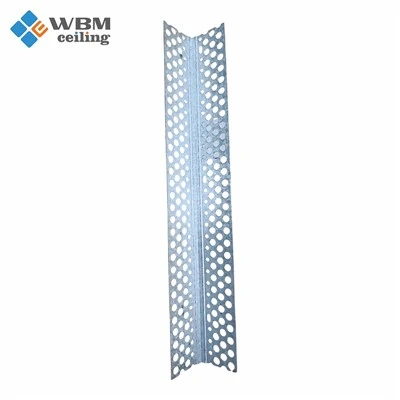
If you’re working on a construction project, large or small, and you’re looking for a reliable partner for C-type ceiling furring channels, we’re here to help. We can provide custom-sized profiles, recycled content certifications, installation support, and fast delivery for projects of any scale. Let’s discuss your project needs and find the right solution for you.
Ceiling and Drywall Metal Profile References:
- International Construction Market Survey, 2024
- European Construction Products Regulation (CPR) Performance Requirements, 2023
- U.S. Department of Energy, Residential Energy Efficiency Trends, 2024
- Global Construction Materials Market Report, C-type Furring Channel Segment, 2023
Langfang Weikaihua Building Material Co., Ltd.
Langfang Weikaihua Building Material Co., Ltd. is one of the most professional c type ceiling furring channel manufacturers and suppliers in China, featured by quality products and low price. Please rest assured to buy discount c type ceiling furring channel from our factory. Contact us for customized service and free sample.
Address: Peng Er Wan Villiage, Zhao Ge Zhuang Town, Wen’an County, Langfang City, Hebei Province, China
E-mail: joyce@wbm.cc
WebSite: https://www.wbmceiling.com/
