As a supplier of PVC steel wire hoses, I’ve often been asked about the heat insulation performance of these versatile products. In this blog, I’ll delve into the factors that influence the heat insulation of PVC steel wire hoses, their practical applications, and how they stack up against other alternatives in the market. PVC Steel Wire Hose
Understanding the Basics of PVC Steel Wire Hoses
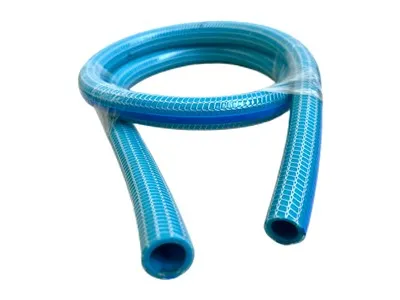
PVC steel wire hoses are composed of a PVC (Polyvinyl Chloride) outer layer and an internal spiral steel wire reinforcement. The PVC material is known for its durability, flexibility, and chemical resistance, while the steel wire provides structural support and prevents the hose from collapsing under pressure. This combination makes PVC steel wire hoses suitable for a wide range of applications, including industrial, agricultural, and household use.
Factors Affecting Heat Insulation Performance
1. PVC Material Properties
The PVC used in the hose construction plays a crucial role in determining its heat insulation capabilities. Different formulations of PVC can have varying thermal conductivity values. Generally, PVC has a relatively low thermal conductivity compared to metals, which means it can act as a moderate insulator. However, the exact insulation performance depends on factors such as the PVC’s density, additives, and molecular structure. For example, high – density PVC may offer better insulation than low – density PVC because it has fewer air pockets that can conduct heat.
2. Wall Thickness
The thickness of the PVC wall is another important factor. A thicker wall provides more material for the heat to pass through, thus increasing the thermal resistance. As heat has to travel a longer path through the thicker wall, the rate of heat transfer is reduced. This is a simple but effective way to enhance the heat insulation performance of the hose. However, increasing the wall thickness also increases the cost and weight of the hose, so a balance needs to be struck between insulation performance and practicality.
3. Steel Wire Design
The steel wire in the hose is mainly for reinforcement, but it can also have an impact on heat transfer. If the steel wire has a large surface area in contact with the PVC and the surrounding environment, it can act as a heat conductor. Minimizing the direct contact area between the steel wire and the external environment can help reduce the heat transfer through the wire. For instance, some advanced designs coat the steel wire with a thin layer of insulating material to prevent heat conduction.
4. Air Layers
Air is a good insulator, and the presence of air layers within the hose or around it can significantly improve its heat insulation performance. For example, some PVC steel wire hoses are designed with a double – wall structure, where an air gap exists between the inner and outer walls. This air layer acts as an additional barrier to heat transfer, reducing the amount of heat that can pass through the hose.
Practical Applications and Heat Insulation Requirements
1. Industrial Use
In industrial settings, PVC steel wire hoses are often used for transporting hot fluids or gases. For example, in chemical plants, they may be used to transfer heated chemicals from one process unit to another. In such cases, good heat insulation is essential to prevent heat loss, which can affect the efficiency of the process and increase energy consumption. The heat insulation performance of the hose can also protect workers from accidentally coming into contact with hot surfaces.
2. Automotive Applications
In the automotive industry, PVC steel wire hoses are used in the engine cooling system, air intake systems, and other areas. In the engine cooling system, the hose needs to have a certain degree of heat insulation to maintain the temperature of the coolant at an optimal level. If the hose has poor heat insulation, the coolant may lose heat too quickly, leading to inefficient engine operation.
3. Home Use
At home, PVC steel wire hoses are commonly used in garden irrigation systems, hot water supply systems, etc. In hot water supply systems, heat insulation helps to keep the water hot as it travels from the water heater to the taps. This not only reduces energy waste but also ensures that hot water is available at a consistent temperature throughout the house.
Comparing with Other Hose Materials
1. Rubber Hoses
Rubber hoses are also widely used in many applications. While rubber can have good heat resistance, its heat insulation performance is often not as good as PVC in some cases. PVC hoses can be designed with better insulation features, such as the use of specific PVC formulations and the inclusion of air layers, which can give them an edge over rubber hoses in terms of heat insulation.
2. Metal Hoses
Metal hoses, such as stainless steel hoses, have high strength and good corrosion resistance. However, they are excellent conductors of heat. In applications where heat insulation is required, metal hoses usually need to be wrapped with additional insulating materials, while PVC steel wire hoses can offer intrinsic heat insulation properties without the need for external insulation in many cases.
How to Evaluate the Heat Insulation Performance of PVC Steel Wire Hoses
1. Thermal Conductivity Testing
One of the most accurate ways to evaluate the heat insulation performance of a PVC steel wire hose is to measure its thermal conductivity. This can be done in a laboratory using specialized equipment. A lower thermal conductivity value indicates better heat insulation.
2. Temperature Difference Measurement
In practical applications, the temperature difference between the inside and outside of the hose can be measured. A larger temperature difference means that the hose is better at preventing heat transfer, indicating good heat insulation performance.
Conclusion
In conclusion, the heat insulation performance of PVC steel wire hoses is influenced by multiple factors, including the PVC material properties, wall thickness, steel wire design, and air layers. These hoses offer a good balance between heat insulation, durability, and flexibility, making them suitable for a wide range of applications in industrial, automotive, and home settings.
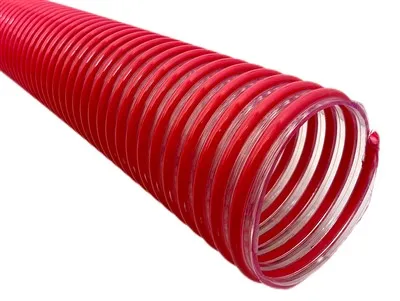
As a supplier of PVC steel wire hoses, we are committed to providing high – quality products with excellent heat insulation performance. Our hoses are carefully designed and manufactured to meet the specific needs of our customers. Whether you are looking for hoses for industrial processes, automotive applications, or home use, we have the right solutions for you.
Gas Pipe If you are interested in purchasing PVC steel wire hoses and want to discuss your requirements in detail, please feel free to contact us. We look forward to working with you and providing you with the best – in – class products and services.
References
- Incropera, F. P., & DeWitt, D. P. (2001). Fundamentals of Heat and Mass Transfer. John Wiley & Sons.
- Holman, J. P. (1992). Heat Transfer. McGraw – Hill.
-ASHRAE Handbook of Fundamentals. American Society of Heating, Refrigerating and Air – Conditioning Engineers.
Weifang Xinzhiyuan Plastic Co., Ltd.
As one of the most experienced pvc steel wire hose manufacturers and suppliers in China, we offer a wide range of products with superior quality. Please feel free to wholesale premium pvc steel wire hose made in China here from our factory. We also accept customized orders.
Address: No. 700, Tongle Street, Economic Development Zone, Changle County, Weifang City, Shandong Province
E-mail: hua@xzypvchose.com
WebSite: https://www.pvchose-xzy.com/
